Do you think traveling in Rome is expensive? You’re wrong. The Eternal City offers countless extraordinary experiences that don’t cost a single euro—you just need to look beyond the usual tourist guides.
Forget the pricey tickets: in this guide, we’ve selected 25 completely free ideas— some of them unusual—including historic parks, mural galleries, breathtaking views, and cultural gems. A definitive list designed for both city residents and first-time visitors to Rome. Plan your itinerary: let’s get started on a zero-budget adventure!
St. Peter’s Basilica

Admission to St. Peter’s Basilica is free, although you must pass through security checks and long lines may form. Inside, you can admire Michelangelo’s Pietà, Bernini’s Baldachin, and numerous works of art.
The dome, the necropolis, and other special tours, however, require a ticket.
The Steps of the Altar of the Fatherland
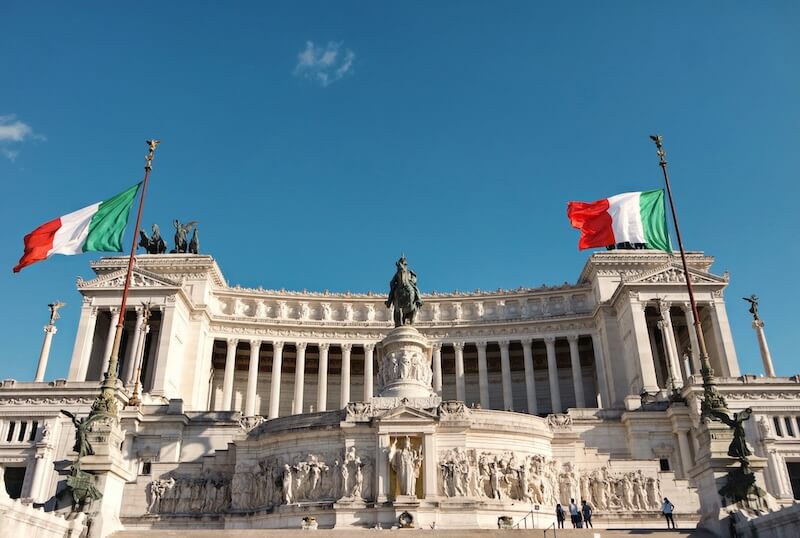
The Vittoriano is one of Rome’s most recognizable monuments. Even without buying a ticket for the panoramic elevator, you can climb the steps and reach the complex’s outdoor areas.
You can combine this visit with a walk toward the Capitoline Hill, the Roman Forum, and Via del Corso.
Caravaggio at San Luigi dei Francesi
The Contarelli Chapel, in the church of San Luigi dei Francesi, houses three masterpieces by Caravaggio dedicated to Saint Matthew: *The Calling*, *The Inspiration*, and *The Martyrdom*.
Admission is free during opening hours. A helpful tip: the artificial light that illuminates the paintings is activated by inserting a 50-cent or 1-euro coin into the designated slot, and without that light, the paintings remain in semi-darkness. It’s therefore a good idea to arrive with some loose change. During religious services, please make room for the faithful.
Michelangelo’s Moses at San Pietro in Vincoli
The Basilica of St. Peter in Chains houses Michelangelo’s famous “Moses,” created for the funerary monument of Pope Julius II.
Admission to the basilica is free. Hours may vary during religious services, so it’s best to check them before you go.
Mosaics of Santa Prassede
Near Santa Maria Maggiore is the Basilica of Santa Prassede, one of the most evocative sites of early Christian Roman art.
The Chapel of St. Zeno, with its golden mosaics, is the most spectacular highlight of the visit. Admission is free, subject to liturgical activities.
Santo Stefano Rotondo
On the Celio Hill, the Basilica of Santo Stefano Rotondo surprises visitors with its circular layout and its cycle of frescoes dedicated to the martyrdom of the saints.
It can be visited for free during opening hours, which are limited and vary throughout the year: it’s a good idea to check them before heading out. The area is perfect for a stroll among churches, villas, and lesser-known archaeological ruins.
The Ecstasy of Saint Teresa
The Church of Santa Maria della Vittoria housesBernini’s *The Ecstasy of Saint Teresa* in the Cornaro Chapel, one of the most theatrical masterpieces of the Roman Baroque.
Admission is free, but visits are subject to the church’s opening hours and must respect ongoing services.
St. Peter’s Dome from Via Piccolomini
Do you like optical illusions? Via Piccolomini, in the Aurelio neighborhood, is famous for a perspective illusion: as you approach along the street, St. Peter’s Dome appears to get smaller instead of larger.
It’s a short, free experience, particularly evocative at sunset or when the dome is illuminated.
St. Peter’s through the keyhole
Another unmissable optical illusion in the Eternal City: on the Aventine Hill, the main gate of the Priory of the Knights of Malta offers an unusual view of St. Peter’s Dome, perfectly framed by the gate.
The viewpoint is visible from the public street. During peak hours, there may be a short line on the sidewalk.
The Devil’s Chair
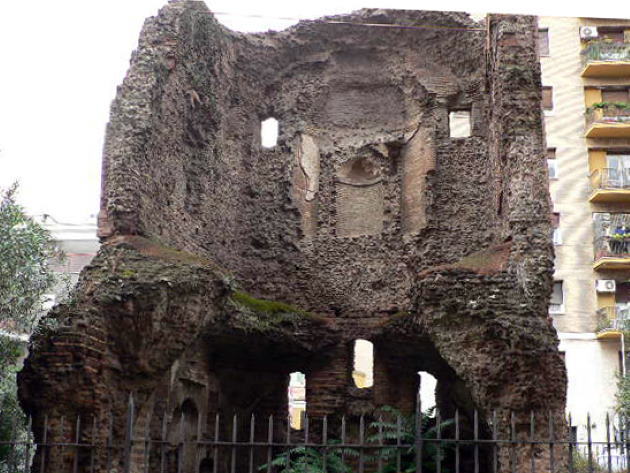
Rome is full of intriguing architectural sites: in Piazza Elio Callistio, in the Trieste neighborhood, you’ll find the remains of a Roman tomb known as the Devil’s Chair.
The structure, which resembles a large stone armchair, can be viewed for free from the outside. It’s an interesting stop on a stroll through a residential neighborhood far from the most popular tourist routes.
Coppedè District
The Coppedè neighborhood stretches between Piazza Mincio and the nearby streets, a collection of palaces and villas with fairy-tale, Art Nouveau, and eclectic designs.
The walk is free and lets you see the Fountain of the Frogs, imaginative decorations, and unusual architectural details. Since this is a residential neighborhood, it’s important to behave respectfully.
Little London

Via Bernardo Celentano, in the Flaminio neighborhood, is a small private street open to the public, featuring colorful little houses, gardens, and details inspired by British architecture.
It’s a great free plan because you can walk the route and take photos from the outside without entering private properties. It’s best to avoid making noise, gathering in groups, and stopping in front of people’s homes.
Pincio Water Clock
On the Pincio terrace, adjacent to Villa Borghese but not part of the park itself, stands the Water Clock, a unique 19th-century mechanism powered by the flow of water.
The building can be viewed for free from the outside. Access may be suspended due to maintenance, so it is not guaranteed at all times.
Street Art in Tor Marancia
In the “Street Art and Contemporary Architecture to See for Free” series, in Tor Marancia, large murals add color to the facades of a public housing complex that has been transformed into an open-air museum of urban art.
The artworks can be viewed for free from the outside and are accessible by strolling through the neighborhood’s blocks. It’s an original idea for those who want to discover a side of Rome different from the monuments in the city center.
Quadraro Murals
The MURo project, Rome’s Museum of Urban Art, has brought numerous works of public art to the streets of Quadraro.
There’s no ticket to buy: just wander through the neighborhood in search of the murals. The itinerary is particularly interesting if you want to combine street art, the legacy of the Resistance, and local history.
MAAM in Metropoliz
The MAAM, Metropoliz’s Museum of the Other and the Elsewhere, is located inside a former factory on Via Prenestina and houses contemporary artworks set within a lived-in space.
This is not a museum with guaranteed daily opening hours: access depends on organized tours, events, and opening times announced by the project, and the status of the building has changed several times over the years. Before you go, it is therefore essential to check the schedule and admission procedures on the museum’s official channels.
Church of the Holy Face of Jesus
In the Magliana neighborhood, the Church of the Holy Face of Jesus is an interesting example of contemporary religious architecture, featuring original geometric designs and modern works of art.
Admission is free during opening hours. The parish indicates general opening hours from 8:00 a.m. to 1:00 p.m. and from 4:00 p.m. to 8:00 p.m., but recommends contacting the parish office before your visit, as the church is not open to visitors during Masses and private celebrations.
Museum of the Walls
At Porta San Sebastiano, the Museum of the Walls tells the story of the Aurelian Walls and, when accessible, allows you to walk along a section of the rampart walkway—one of the few places where you can walk inside the ancient city walls.
Admission is free for everyone—residents and non-residents alike—all year round. However, some tours or entry time slots may require a reservation at 060608: it’s best to check the announcements before you go.
Villa Borghese

Villa Borghese is one of the best places to walk, run, have a picnic, or spend a few hours surrounded by nature without spending a dime.
The park features tree-lined avenues, statues, fountains, and a small lake. The attractions within it, such as the Borghese Gallery and the Bioparco, require an admission fee.
Orange Garden

The Orange Garden, or Savello Park, offers a splendid view of Rome’s rooftops and St. Peter’s Dome.
Admission is free, and the park is particularly charming in the evening. You can create an Aventine Hill itinerary by combining this stop with the “Keyhole” and the nearby Municipal Rose Garden, when it’s open.
Municipal Rose Garden
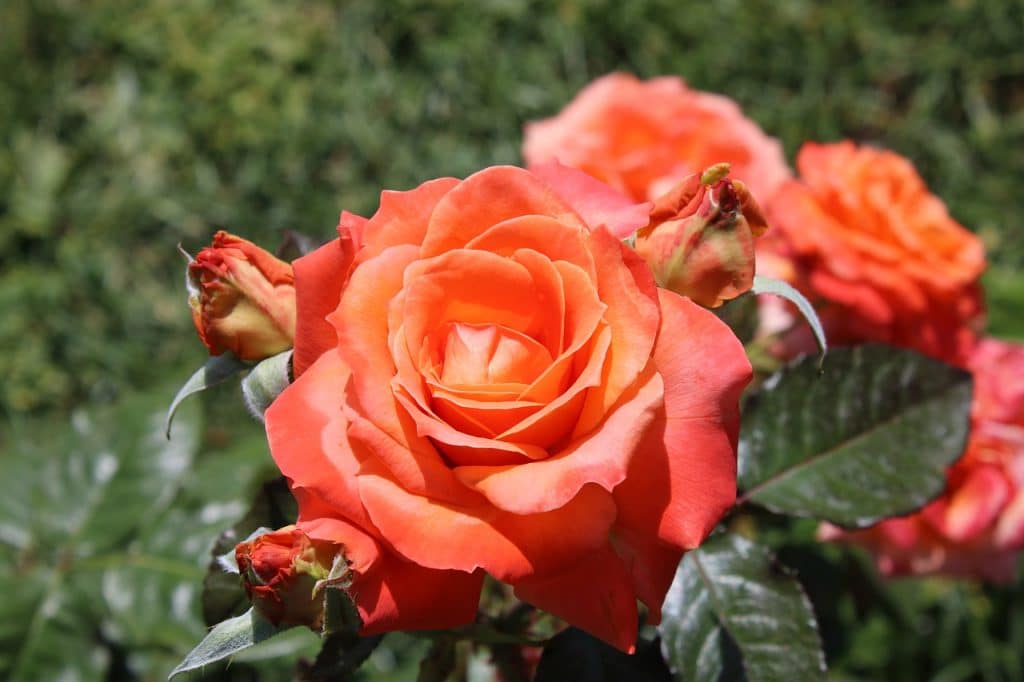
The Municipal Rose Garden is open free of charge only during certain times of the year, generally in the spring and, for a shorter period, in the fall.
In 2026, the spring opening took place from April 11 to June 14, daily from 8:30 a.m. to 7:30 p.m., with free admission for everyone; the competition area—where the roses vying for the “Premio Roma” were displayed—opened only on May 18. Readers planning a visit in the fall should wait for the fall blooming calendar, which Roma Capitale publishes annually with dates that vary from year to year.
Guided tours by reservation: rosetoromacapitale@comune.roma.it, tel. 06 5746810
Giardino delle Cascate in the EUR district

The Giardino delle Cascate is located on the banks of the EUR lake and features bridges, water features, vegetation, and modern architecture designed by Raffaele De Vico.
Admission is free, and the garden is perfect for a stroll or a photo session. Be aware, however, of a detail that’s often misreported: the garden isn’t managed by the city but by EUR S.p.A., which sets the hours and may change them several times a year. The latest hours announced by the company are 7:00 a.m.–5:30 p.m., whereas in the past , closing time was set at 8:00 p.m. The operation of the fountains may also be suspended for maintenance . Before visiting, it’s a good idea to check the announcements from EUR S.p.A.
Appia Antica, Caffarella Valley, and Parco degli Acquedotti
Walking along the Appian Way means traversing one of Rome’s most important historical landscapes, featuring Roman cobblestones, tombs, villas, catacombs, and countryside. From the same area, you can reach the Caffarella Valley, which offers a surprisingly rural landscape of trails, farmhouses, archaeological ruins, and wide meadows. Further to the southeast, the Parco degli Acquedotti rounds out the scene with its open meadows crisscrossed by the arches of ancient Roman aqueducts: it is the most scenic part of the entire system and the best spot for running, taking photos, or having a picnic.
The three areas are part of the same Appia Antica Regional Park and can be explored on different days. Access to the road and green spaces is free, while some monuments, museums, and archaeological sites along the route may require an admission ticket.
Villa Sciarra
Villa Sciarra, on the slopes of the Janiculum Hill between Monteverde and Trastevere, is a historic villa that’s much less crowded than Villa Borghese and Villa Doria Pamphilj.
The park features fountains, statues, tree-lined paths, and quiet corners, ideal for a break away from the traffic. Admission to the park is free; hours vary by season.
Japanese Garden
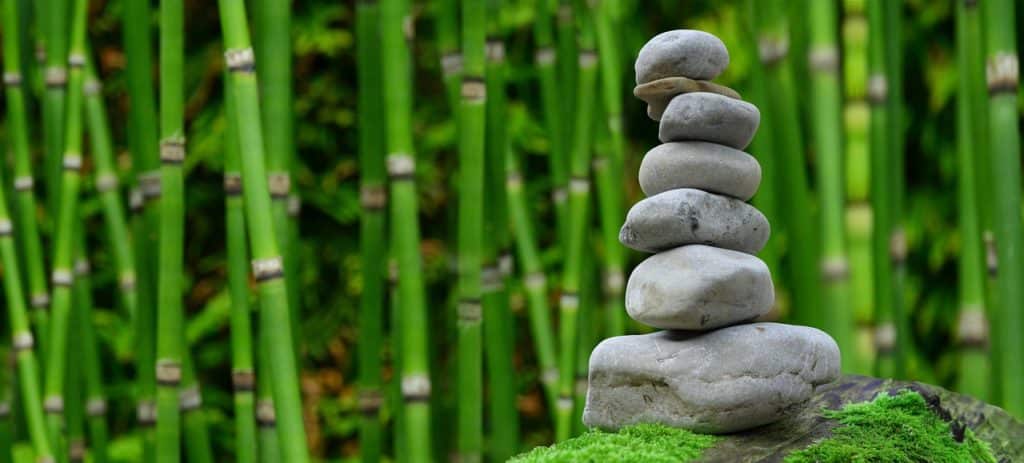
Hidden behind an unassuming gate in Valle Giulia lies the first Italian garden designed by a Japanese landscape architect, Nakajima Ken—the same designer behind the Japanese section of the Botanical Garden. One thousand five hundred square meters of pond, a small waterfall, islets, rocks, a footbridge, and stone lanterns, with cherry trees, wisteria, irises, maples, and camellias: a sen’en-style strolling garden that reproduces, on a smaller scale, those found in Japanese aristocratic residences.
Admission is free and remains so year-round, but access is limited. Tours take place on Thursdays and Fridays in the afternoon, last about twenty-five minutes, and require a reservation; an audio guide is available via QR code. Spots fill up quickly and the schedule is subject to change, so it’s best to check the Institute’s website a few weeks in advance.