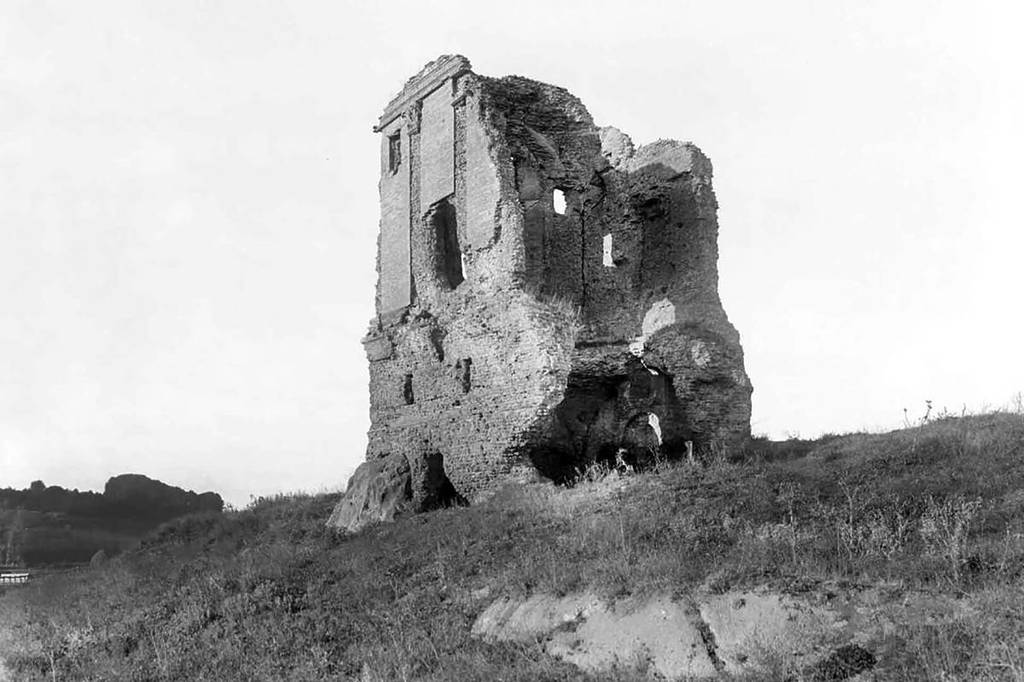
Walking around Rome it happens that one comes across ruins that seem to speak for themselves, telling a distant story, but some have an even more enigmatic charm. Among the modern buildings, along one of the city’s ancient streets, stands a monument that resembles a giant throne, surrounded by mysterious stories and dark legends. It is the tomb known as the Devil’s Chair.
The Devil’s Chair in Rome: the origin of an unusual Roman tomb.
The monument dates back to the mid-2nd century AD and was built as a monumental tomb in the “temple” (or naiskos) style, probably for a freedman named Aelius Callistius, who was linked to Emperor Hadrian. The architecture was impressive: a lower floor, partially underground, with niches and arcosoles covered with white mosaics; and an upper floor with rooms reserved for funerary rites, enriched by columns, niches, and a large decorative shell.
Today only fragments of this splendor remain, but sufficient to testify to the magnificence of the original monument.
From mausoleum to legend: why it was called the “Devil’s Chair”
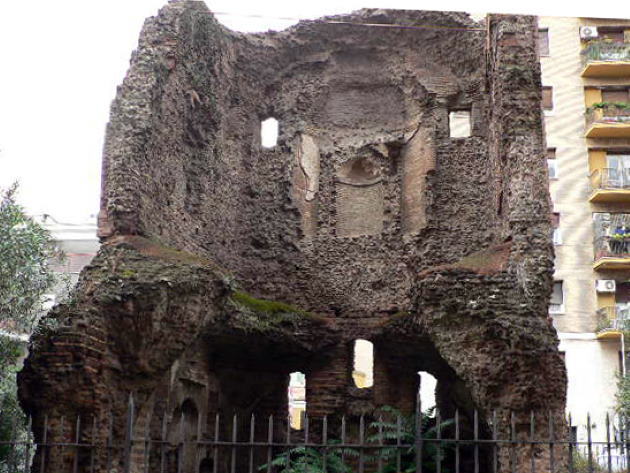
As the centuries passed, part of the facade collapsed, leaving only three sides standing. The structure, isolated on a knoll along Via Nomentana, took on the shape of an enormous cathedra. It did not take long for popular imagination to transform it into the so-called “Devil’s Chair.” In the Middle Ages, the ruin became a feared place, a refuge for shepherds and wanderers but also for witches and alchemists. At night, the flames burning inside it seemed to come from dark rituals, fueling the legend of the demonic throne.
The most fascinating stories about Rome’s Devil’s Chair.
According to some legends, an alchemist engraved the word “kabala” on some of the monument’s stones , leaving behind a magical enigma that would bestow powers on those who managed to reassemble the letters. Other accounts tell that the dust from its stones was used as a miraculous ingredient in secret potions. There is no shortage of even more disturbing versions, which speak of satanic orgies, summoning and prophetic gatherings, so much so that church authorities had to intervene several times.
The Devil’s Chair today: mystery and fascination in the Trieste district
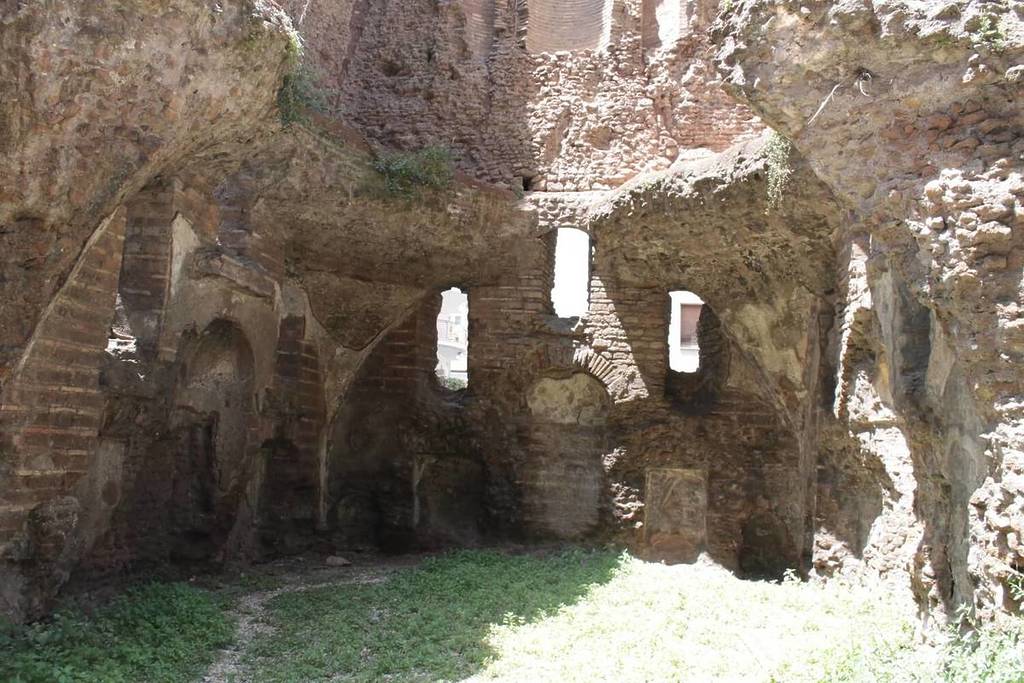
Today the Devil’s Chair is nestled in the Trieste-African neighborhood, surrounded by buildings and city traffic. It is a ruin that retains a decadent charm, accessible only from the outside, but still capable of evoking mysterious suggestions. In 1958, the square that bore his name was renamed “Elio Callistio Square,” to mitigate the too-direct link with the Devil.
Despite the new name, the enigmatic aura of the place endures, and those who observe it cannot help but imagine the ancient stories that made it famous.
Where is the Tomb of Aelius Callistius in Rome: address and how to visit it
The Devil’s Chair is located at Piazza Elio Callistio, 8 – 00199 Rome RM, in the Trieste district, a short walk from Via Nomentana and the basilica of Sant’Agnese fuori le mura.