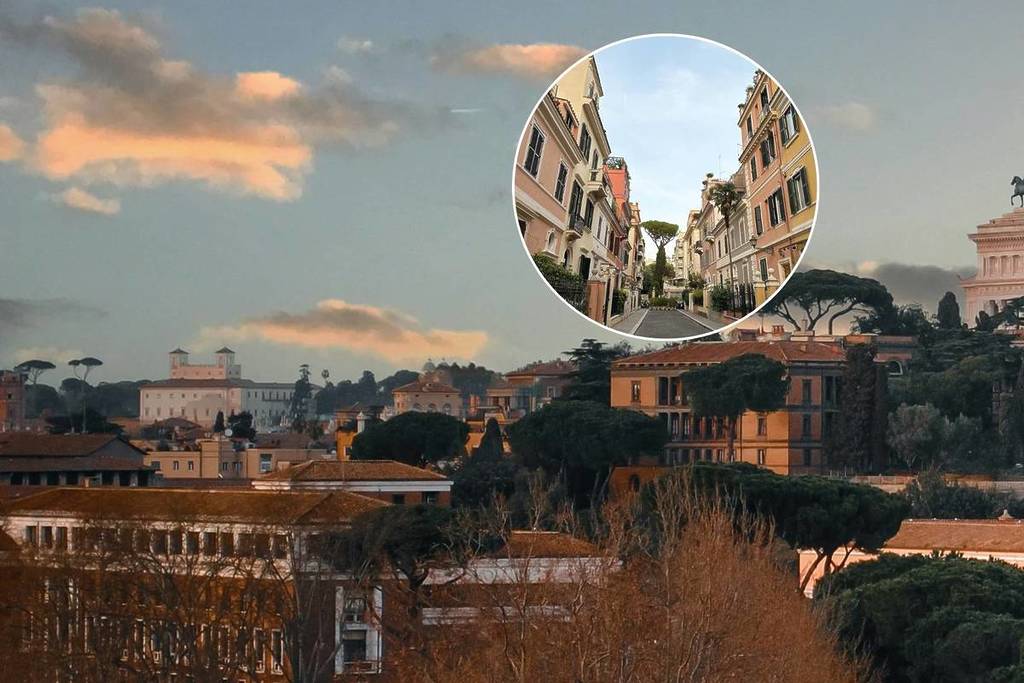
In the heart of Rome, there is a very special little street called “Little London.” This street, Via Bernardo Celentano, is an out-of-time corner reminiscent of the quaint British houses of neighborhoods like Notting Hill. Here you will find colorful cottages with British charm, with wooden entrances and iron gates, small gardens and an intimate, cozy atmosphere.
It is located in the Flaminio district, one of the oldest and most prestigious in Rome, known today as a bustling cultural center of the city. Officially established in 1921 and located north of the historic center, the Flaminio is named after the historic Via Flaminia, one of Rome’s seven consular roads.
The history of Little London

The history of this particular corner dates back to the early twentieth century, when in 1909 then Mayor Ernesto Nathan, of Anglo-Italian descent, wanted to transform Rome to make it a European capital in step with other cities on the continent. Part of his plan called for a strict limit on the height of buildings – a maximum of 24 meters – and the construction of pretty little villas no higher than two stories, with iron gates and green spaces in front of the gates.
Architect Quadrio Pirani translated these directions into a unique corner of the city, giving birth to this very street, an urban planning experiment that has remained isolated and unique. Little London has thus become an oasis of peace under the Roman sky, far from the hustle and bustle of the city, where walking around almost tastes like a trip across the Channel.
For those who love to discover hidden places and “Instagrammable” sceneries in the Capital, this colorful avenue is a must-see, a small world in itself to visit and photograph, where art, architecture and history create a truly evocative atmosphere.
Editor’s note: Unfortunately, it is not possible to enter freely, except by the kindness of a few residents who allow entry through the main gate. But from the outside it is possible, however, to admire the beauty of this little place.