There is a good reason to travel from the capital in the coming weeks: one of Italy’s most beautiful parks is about to close its gates.
Things not to miss during your visit
Created in the 16th century by the creative mind of Jacopo Barozzi da Vignola and commissioned by Cardinal Gambara, the Villa owes its current name to the Duke of Bomarzo, Ippolito Lante Montefeltro della Rovere, who purchased it in the 17th century.
Here’s what you absolutely cannot miss during your walk:
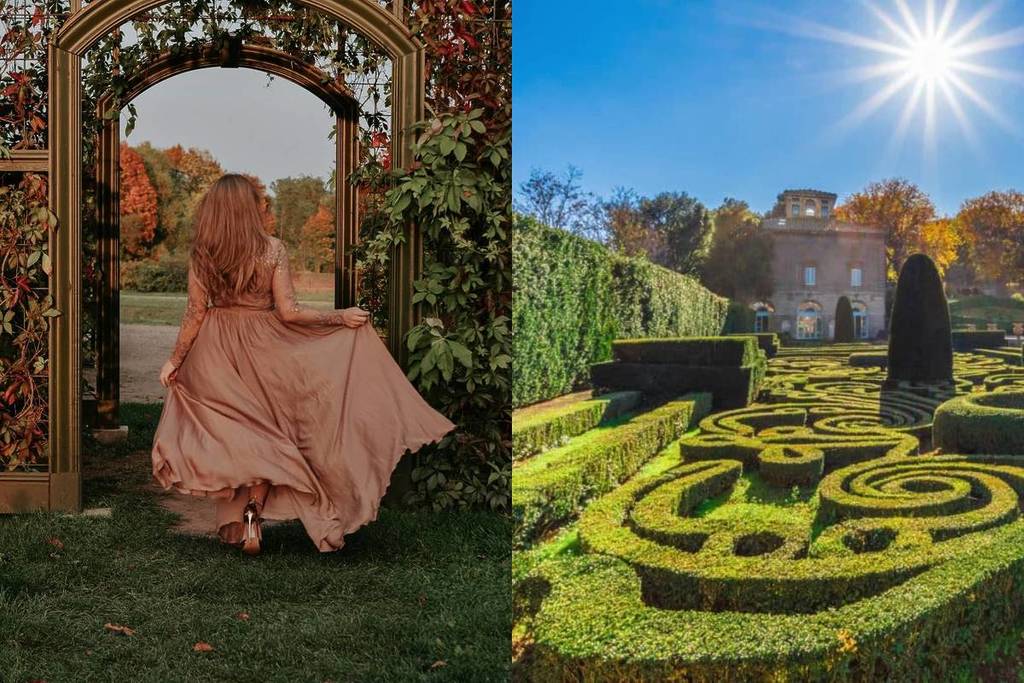
- The Labyrinth: a green maze that leads to the heart of the garden, where Giambologna’s famous Fontana dei Mori (Fountain of the Moors) stands.
- The Mascheroni: along the path, you will encounter stone faces with bizarre expressions, sticking out tongues, and pointed ears. Inspired by classical theater, they had the symbolic task of protecting the place by warding off negative influences.
Villa Lante is famous for its “Catena d’Acqua” (Water Chain), a sculpture symbolizing the flow of the river, a typical feature of Renaissance gardens that served to refresh the air and amaze guests with harmonious sounds (Source: Grandi Giardini Italiani).
For those who wish to enrich their visit by exploring the historic interiors, the two main residences of the complex offer different modes of access that require a little planning.
The main floor of the Palazzina Gambara is only accessible on Wednesdays, with two tours scheduled at 10:30 a.m. and 2:30 p.m. In this case, reservations are essential and must be made by the day before, as groups are limited to a maximum of 15 participants and are accompanied by internal staff.
As for the Palazzina Montalto, it is open on Wednesdays and Thursdays during a limited time slot, from 11:00 a.m. to 12:00 p.m. On Sundays, however, the rooms remain open for the entire duration of the monument’s opening hours, except for the first Sunday of the month. Advance reservations are not required for this building.
 ValerioMei / Shutterstock.com
Technical shutdown
From March 2 to 31, 2026, the entire monumental area will be completely inaccessible to the public to allow for the final phase of a major PNRR construction project, a massive intervention involving the entrance avenues and underground services to improve accessibility and the health of the historic greenery.
Those who choose to visit during this period will find a suspended, almost archaeological atmosphere. Due to the major structural restoration work still in progress, the famous fountains are currently without water and some areas of the garden are not visible or are partially covered by construction sites. To compensate for this reduced enjoyment, the management has taken an exceptional decision: the cost of admission has been lowered to a special rate of only €5, a rare opportunity to explore the site at a symbolic price before the forced closure.
The management apologizes for the inconvenience caused by safety and security measures and emphasizes that these road leveling and resurfacing works are the last necessary effort to restore a safer and more modern gem to the public.
Opening hours
To avoid being left outside the gates before the total closure in March, it is essential to keep a close eye on the clock. Between November 4 and February 28, the weekday opening hours are slightly reduced: opening time remains 8:30 a.m., but closing time is brought forward to 4:30 p.m., with last admission at 4:00 p.m.
Double your attention if you are planning a trip on a Sunday or public holiday. On these dates, from November 1 to March 15, the complex is only open in the morning. The gates open at 8:30 a.m. and close strictly at 1:45 p.m., with the last admission at 1:15 p.m.