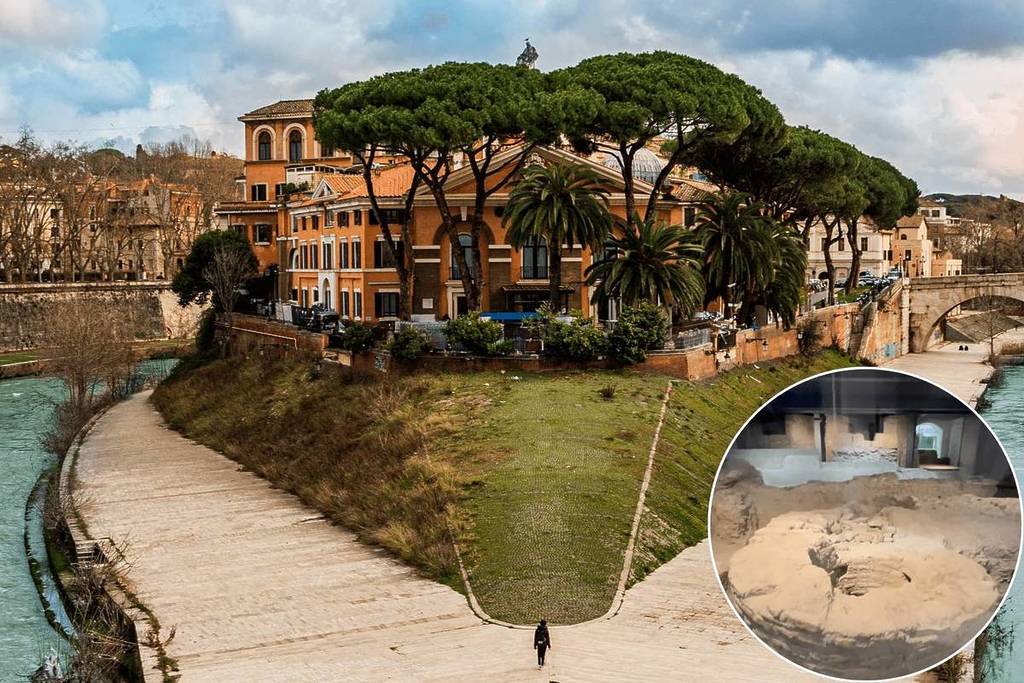
Have you ever thought of taking a trip back in time simply by taking an elevator? There is an archaeological area in Rome that you can visit for FREE, and it is hidden in a place you would probably never think of going for pleasure: the basement of a hospital.
If you thoughtTiber Island, the world’s smallest inhabited island, was just a health resort or a romantic glimpse of the Tiber River, prepare to discover a thousand-year-old secret jealously guarded beneath the wards of theIsola Tiberina – Gemelli Isola Hospital.
As soon as you cross the threshold of this historic facility, once known as Fatebenefratelli, you find yourself at a site where medicine and myth have been blending for more than 2,300 years.
Looking for interesting things to see in Rome? Forget the mile-long queues at the Colosseum: here history is breathed in silence, among modern corridors and stones that saw the birth of the Empire.
A millennial treasure under the Hospital: what to see on the -1 floor
Entering the archaeological area of the Tiber Island Hospital is very easy: just go downstairs, following the signs for the CUP.
Already along the stairs and then in the waiting room, you will be confronted with impressive Roman remains. Here, during expansion work in the 1930s and then in the 1990s, treasures surfaced that testify to the sacredness of the place.
You can admire up close an imposing marble block with an inscription dedicated to Aurelius Rugianus, legate of the 13th Gemine Legion, dating from the first half of the third century AD.
But that’s not all: the site preserves sections of black-and-white tessera mosaic flooring and remains of a rectangular hall made of tufa blocks, identified as the Temple of Iuppiter Jurarius.
Walking among these relics as hospital life continues on the upper floor is an experience that will leave you with an absolute sense of wonder.
The myth of the “Ship” Island: among sacred snakes and the Temple of Aesculapius
Why are these remains from the Republican era of the Capital located here? It all goes back to 291 BC, when Rome was hit by a devastating plague. Legend has it that a Roman delegation brought from Epidaurus a sacred snake, a symbol of Aesculapius, the god of medicine. Once they arrived on the Tiber, the snake jumped off the ship and took refuge on Tiber Island: it was interpreted as the divine will.
From then on, the island was shaped to resemble a real stone ship (the travertine prow is still visible on the southern tip!) and became the center of healing in Rome.
The remains of the majestic Temple of Aesculapius lie just below the church of St. Bartholomew and the hospital facilities, testifying to an unbroken therapeutic continuity for millennia.
Beyond history: the beauty of the new CUP and medical excellence
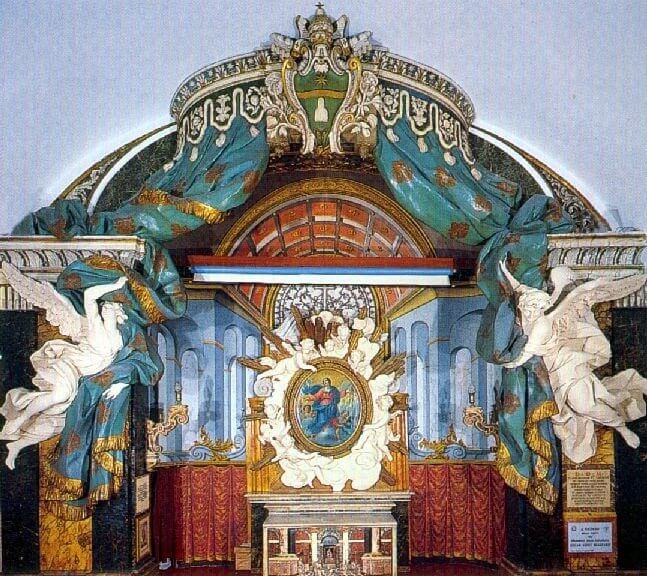
https://lazio.cultura.gov.it
Today Isola Tiberina Hospital has taken on a new life thanks to the management of the Isola Tiberina Society and the know-how of Gemelli. Visiting the CUP (Single Reservation Center) is a surprise in itself: it is a modern, bright and design space, perfectly integrated into the historical context.
This facility is not only a hub of healthcare excellence (home to DEA Level 1), but an example of how innovation can honor tradition.
The concept of “Humanization” of Fatebenefratelli still lives on in the revitalization project, making the hospital a “home” open not only to patients, but also to those who want to discover the hidden beauty of Rome.
How to organize your visit: practical info and tips
The archaeological area under the former Fatebenefratelli Hospital in Rome is one of the few places where archaeology is an integral part of daily life and not a musealized artifact.
Here are the details for your visit:
- Address: Tiber Island Hospital – Gemelli Isola, Via di Ponte Quattro Capi, 39, Rome.
- Cost: access to the common areas on floor -1 and the CUP, where the exhibits are located, is free.
- Hours: I recommend you visit the site on weekdays (Monday-Friday) between 08:00 and 17:00 to fully enjoy the light of the interior spaces.
- How to get there: streetcar 8 (Arenula/Ministry of Justice stop) or Bus lines 23, 280, 63.
What to do after your visit: the best pastry shop in the Ghetto.
Once out of the hospital, don’t run away! Isola Tiberina is the perfect bridge between two of Rome’s most beautiful neighborhoods: Trastevere and the Jewish Ghetto.
If you’re looking for gastronomic experiences in the Roman area that match the beauty you’ve just seen, cross Ponte Fabricio (the oldest bridge in Rome still in use!).
A few steps away you’ll find the famous Forno Boccione, in the Ghetto, famous for its “burnt” ricotta and sour cherry cake that attracts gourmands from all over the city. It is the perfect way to end a morning exploring “Secret Rome,” combining the wonder of the underground excavations with the unmistakable taste of the local culinary tradition.
Well, what can I say, this archaeological area is proof that Rome still has secrets to reveal to those who know how to look beyond the surface.