The 2023 income analysis published by the Ministry of Economy and Finance (MEF) and made accessible through an interactive map created by Withub – taken up by Corriere della Sera – highlights significant economic inequalities between neighborhoods in major Italian cities.
In Italy, the issue of income inequality remains one of the most significant challenges, with income differences evident especially within large urban centers, which today represent complex spaces, the scene of profound social, economic and cultural changes. This will be discussed Sept. 26-28 in Turin at Future 4 Cities with Will.
The situation in Rome
In Rome, the neighborhood with the highest average taxable income is Pinciano. Acilia, Casal Palocco and Ostia Antica, where the average taxable income is lowest, are the poorest. This figure is a reminder that, even within the same city, there are marked differences in economic well-being between different areas, with important social and political implications.
Pinciano neighborhood: what to see
The Pinciano district is one of the most elegant and renowned areas of Rome, located north of the historic center, just outside the Aurelian Walls, between Via Flaminia and Via Salaria. It is part of the city’s first official neighborhoods, established in 1921, and borders prestigious areas such as Parioli, Flaminio, Salario, Ludovisi, and Campo Marzio.
The Pinciano is famous for its blend of historic and modern architecture: it is home to examples of late neoclassical, neo-baroque, and academic styles, along with important works of 20th-century rationalist and functional architecture. The district is particularly developed along Via Pinciana, Via Paisiello, and Via Bertoloni and is distinguished by the stately villas built in the early twentieth century according to the 1909 master plan, along with palaces and embassies that define its urban profile.
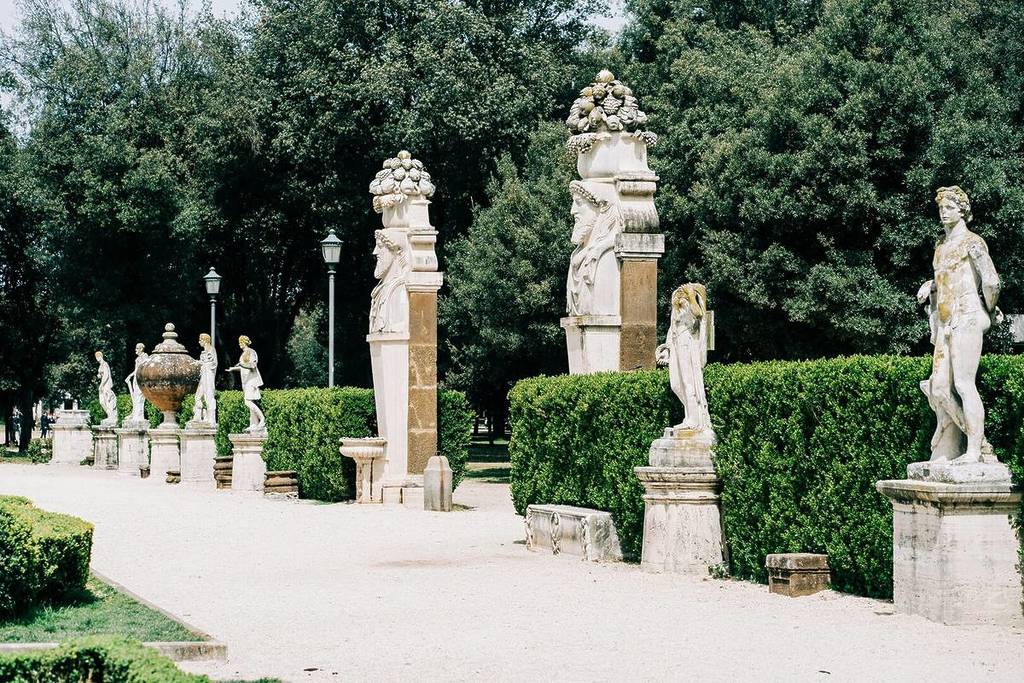
The green and cultural heart of the Pinciano is represented by Villa Borghese, one of Rome’s largest and most evocative parks, which is home to attractions such as the Borghese Gallery, the National Gallery of Modern and Contemporary Art, the National Etruscan Museum of Villa Giulia, the Biopark, and the Civic Museum of Zoology. Thanks to these places of art and culture, the district is also a center of cultural events and recreational activities.