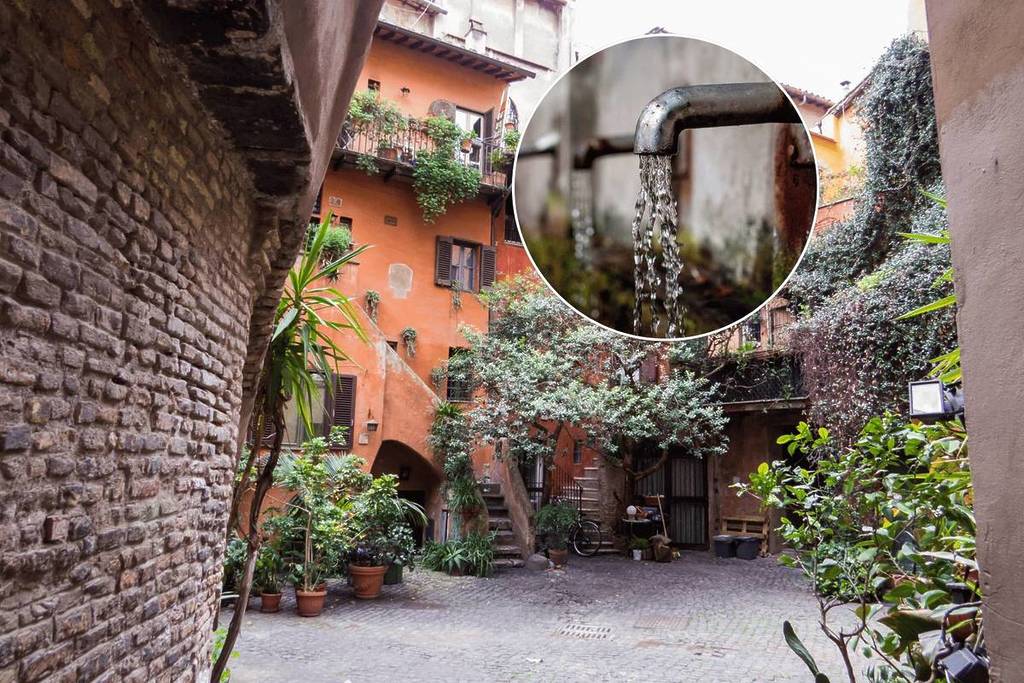

If there is one place capable of suspending time in the chaotic historic center of Rome, it is undoubtedlythe Arco degli Acetari. Located at Via del Pellegrino 19, a few steps from the lively Campo de’ Fiori, this gateway leads to an internal courtyard that seems to have escaped intact over the centuries, preserving a purely medieval atmosphere.
A journey through time among houses with porches
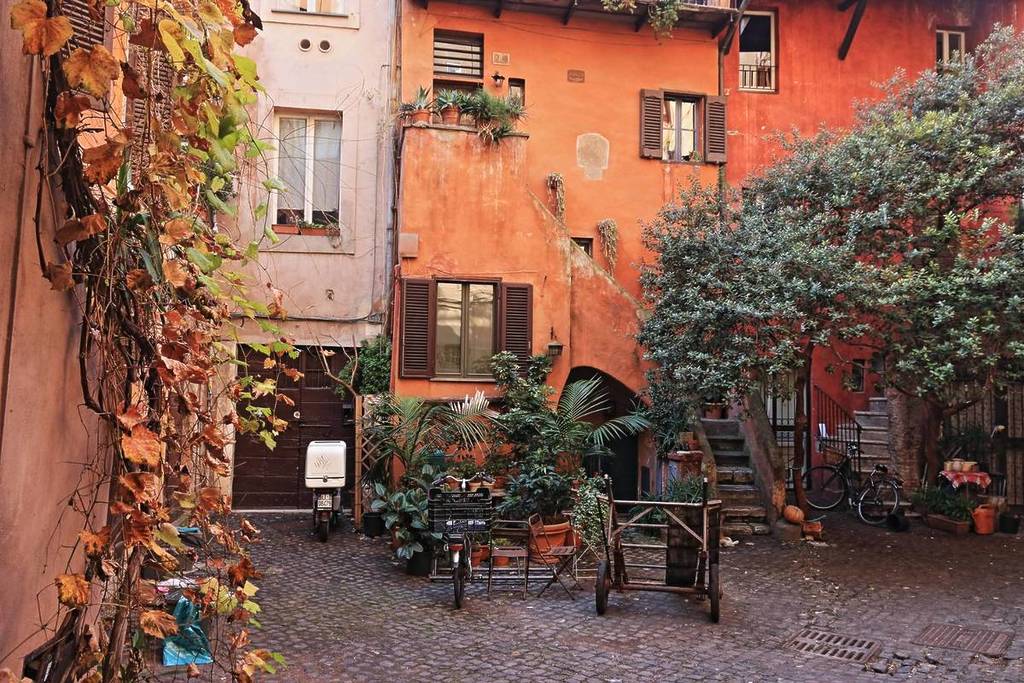
Crossing the archway means leaving behind the noise of the modern city to immerse yourself in a living picture. The small internal square is characterized by ocher-colored houses, typical external wooden and masonry staircases, and lush vegetation cascading from the balconies. This glimpse represents one of the few remaining examples of minor Roman medieval architecture, where the houses retain the structure of the ancient houses typical of the popular villages of the time. In fact, it feels like being in a small village within the city!
Who were the Acetari? The name of the place is not accidental, but is closely linked to the commercial history of the capital. Here, between the 16th and 19th centuries, were the warehouses and stables of the Acetari (or Acquacetosari). These street vendors transported Acqua Acetosa, a particular acidic mineral water from a spring located in the flat area of Parioli.
The fame of this water exploded in 1613, when Pope Paul V Borghese declared it healing and miraculous, considering it beneficial for the kidneys and stomach. Demand became so great that a central storage point was needed, identified precisely in this courtyard near the Campo de’ Fiori market.
Useful information
Although the Arco degli Acetari is private property, access is usually allowed to admire the courtyard while respecting the peace and quiet of the residents.
Visiting hours: generally accessible every day until 11:00 PM.