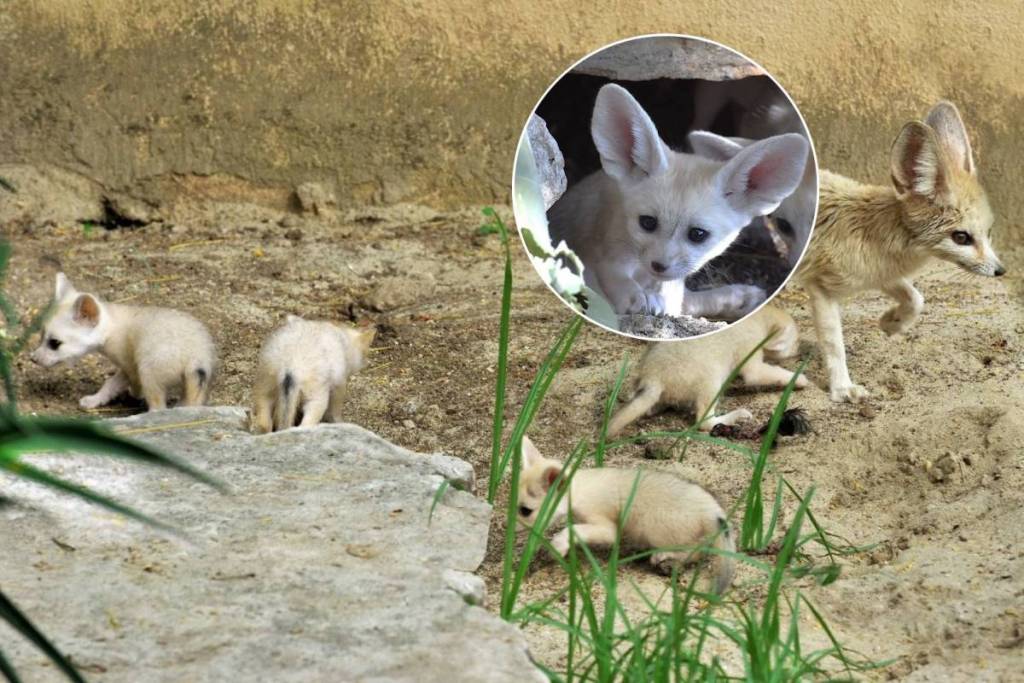

A joyful event recently brought excitement to Rome’s Bioparco, where five fennec fox cubs were born about a month ago. The cubs are in excellent health and have recently begun the weaning process, though they continue to be nursed by their mother. They are currently living safely in a den dug into the sand by their parents—a behavior typical of this species—and it has not yet been possible to determine their sex.
The pups’ mother is named Bella; she is seven years old and was born right here at the Roman facility. The father, Rocco, is the same age as her and arrived in Italy from the Kraków Zoo in October 2025. His transfer is part of the European EEP programs, a vital network among zoos aimed at protecting endangered species through population management, education, and scientific research.
Discovering the Fennec: The Miniature Canid
The fennec fox is famous for being the smallest canid on the planet, reaching a weight of just one kilogram as an adult. This close relative of the fox is native to the desert regions of North Africa, from the Western Sahara to Egypt. Its most distinctive feature is its enormous ears: up to 10 centimeters long, they account for 20% of its body surface area. These ears act as a veritable cooling system to dissipate heat in the desert and function like radar to detect prey (insects, rodents, lizards) hidden beneath the sand.
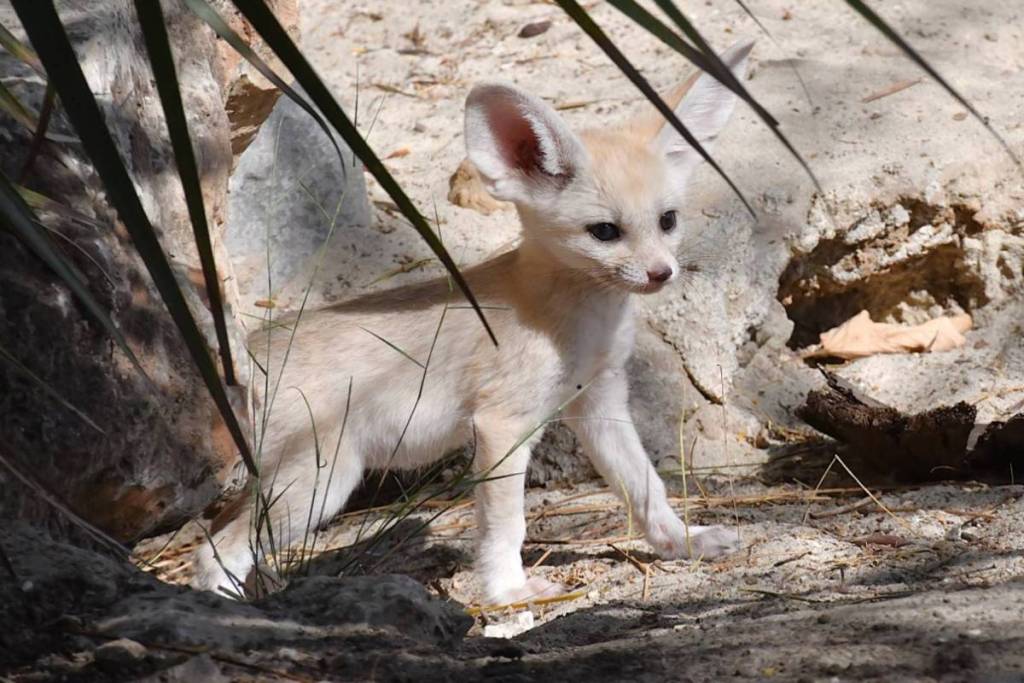
Unfortunately, the survival of these monogamous and territorial animals is seriously threatened by human activities. Fennec foxes are, in fact, victims of poaching for their fur and of a cruel illegal market that exploits them as pets or as photo opportunities for tourists.
Rome’s Bioparco: A Commitment to Conservation
The Bioparco, located in a picturesque 17-hectare green space nestled within Villa Borghese, is much more than just a zoo. As President Paola Palanza has emphasized, the facility is constantly working to move beyond the old concept of a zoological garden, dismantling traditional enclosures to create spacious habitats that respect the animals’ ethology and ecology. A prime example of this is the recent inauguration of a new 500-square-meter area, rich in vegetation and waterways, dedicated to two Eurasian lynx.
In addition, for those who wish to experience the park in a magical atmosphere, the summer initiative is in effect through August 1, 2026, extending opening hours until 9:30 p.m. every Friday and Saturday. This allows visitors to observe the animals at sunset, listen to the keepers’ stories, and enjoy an aperitif at the park’s dining spots, such as the Oasi del Lago or the Caffè del Parco.