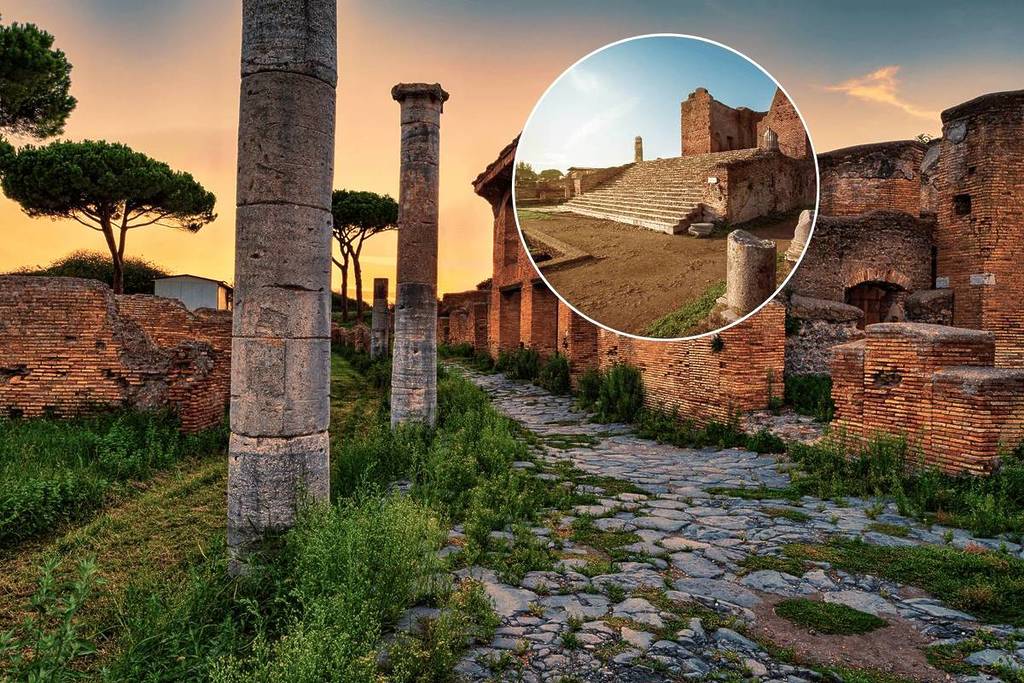

It might seem like a day trip, but it isn’t. In fact, we are in one of Rome’s municipal districts, among ancient theaters and intact mosaics. While crowds of tourists throng the narrow streets of the historic center and the endless lines at the Colosseum, there is a place where time seems to have stood still in a different, quieter, and wilder way.
Here’s why you should visit Ostia Antica
In the heart of the Roman coast lies Ostia Antica, a veritable imperial city preserved beneath a dense canopy of maritime pines. Spanning 150 hectares, much of which has yet to be unearthed, this site is one of the largest archaeological areas in the world alongside Pompeii, earning it the nickname “Little Pompeii of Lazio.”
Ostia Antica is not just an open-air museum, but an ecosystem where archaeology blends with nature. Walking along the Decumanus Maximus means treading on the original paving stones over which goods destined for Rome once passed.
The charm of Ostia lies in its preserved everyday life. You don’t just visit grand commemorative monuments, but the real life of the Romans from two thousand years ago.
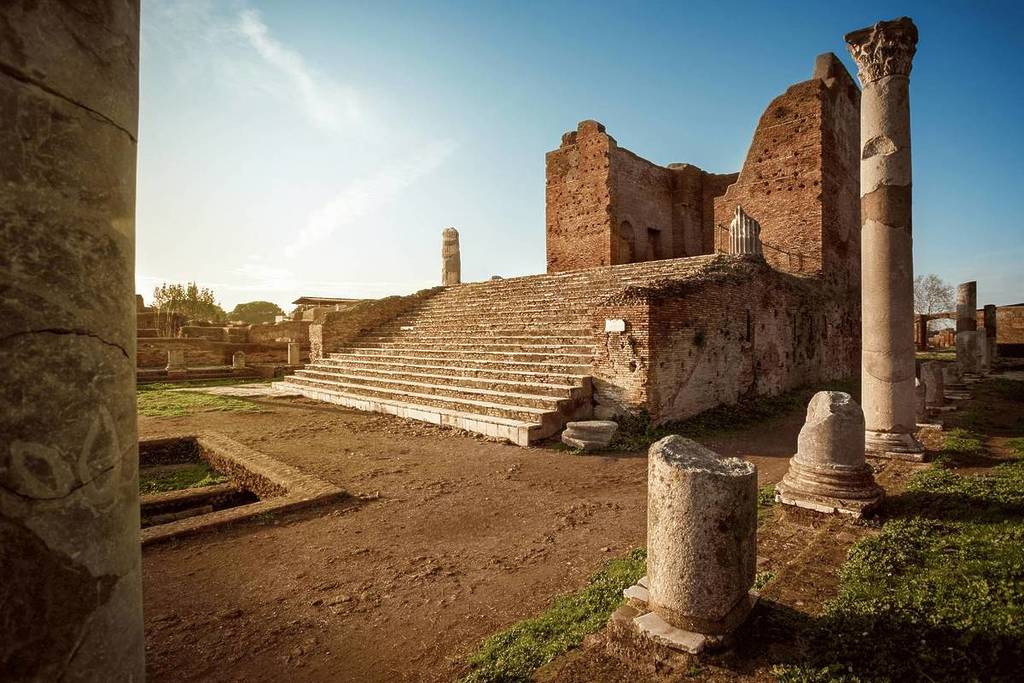
- The Roman Theater: still used today for summer performances, it can accommodate thousands of people and offers a breathtaking view of the entire excavation site.
- The Insulae and Taverns: stepping inside the Thermopolium (the ancestor of our modern-day bars) on Via di Diana allows you to still see the marble counter and the frescoes that advertised the daily specials.
- The Mosaics of the Guilds: a vast plaza where the black-and-white tile floors tell the story, through depictions of ships and dolphins, of the maritime trade that made Rome a superpower.
The Ostia Antica area is the perfect destination for those seeking a rejuvenating “getaway.” Visitors can lose themselves in the side streets, discover small hidden courtyards, or sit on the theater steps to read.
Useful Information
Today, the site is easily accessible via the Roma-Lido railway, making it the ideal alternative for those who want to discover the grandeur of the Roman Empire without the stress of mass tourism.
Must-sees include the Archaeological Park (€18ticket to visit the excavations and the museum), the Castle of Julius II (admission fee applies), and the village of Ostia Antica (very picturesque).