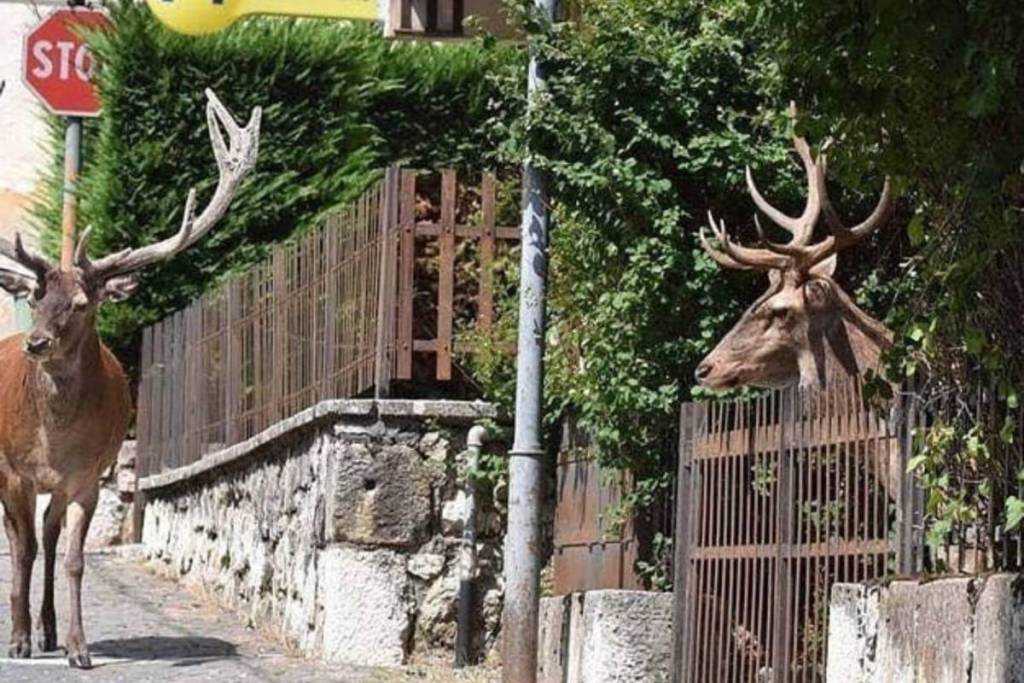

In the heart of the Abruzzo, Lazio, and Molise National Park, wild deer graze in gardens, cross the town square, and sometimes even cut you off while you’re driving. In Villetta Barrea, this is the scene: you park, get out of the car, and just a few meters away, a deer is grazing on the grass in a garden, calm and unconcerned by the comings and goings.
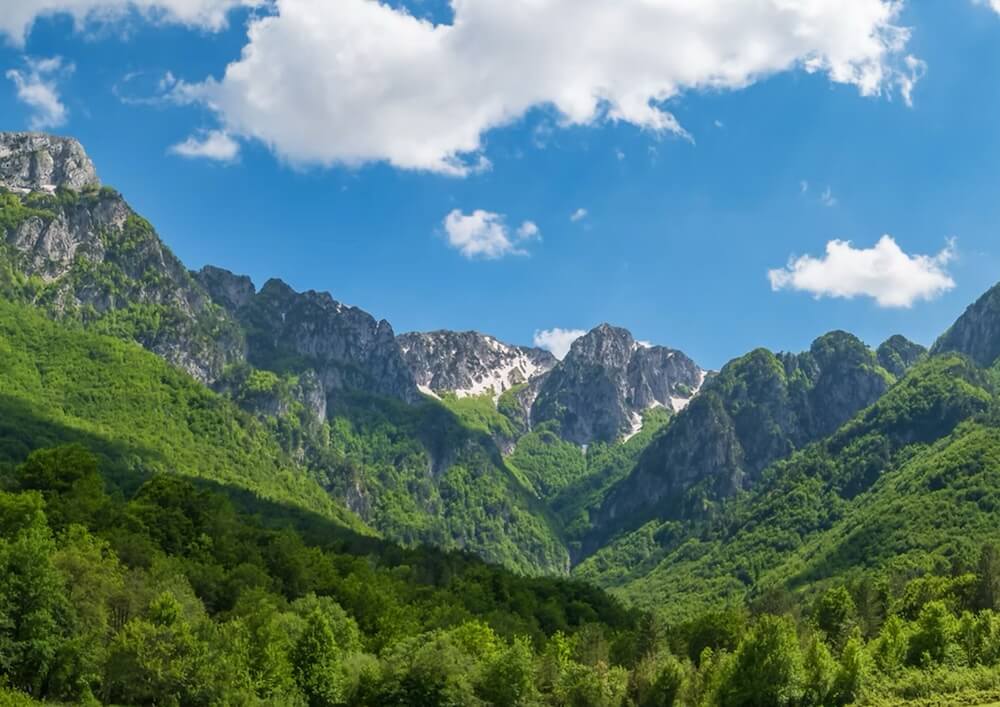
We are at an elevation of 990 meters, overlooking Lake Barrea, within the Abruzzo, Lazio, and Molise National Park, about two and a half hours from Rome. A village built of light-colored stone, recognized as one of Italy’s “Authentic Villages,” it grew up around a medieval tower commissioned by the Caldora family in the 15th century.
The village where deer are your neighbors
The deer here are not a man-made attraction. They are the result of a reintroduction effort that began in the 1970s, when the species had disappeared due to poaching. From an initial population of about fifty, there are now thousands throughout the area, and some have learned to coexist with the village: you’ll encounter them along the Profulo stream, on the Sangro walking path, in public meadows, and in gardens.
The coexistence is so close that signs had to be posted at the village entrance to slow traffic down; vegetable gardens must be fenced in (a deer will eat buds, flowers, and tulips without much hesitation); and the villagers joke that there are more deer than children in town.
It’s endearing, but it’s still wildlife, and that’s the point: observe it from a distance, don’t chase it for a photo, don’t feed it, and drive slowly—especially at dusk, when they suddenly cross the road.
The highlight is autumn. Between mid-September and mid-October, the mating season begins: the males challenge one another, and at night their bellowing—those deep, hoarse calls—echo through the valleys. Park guides organize evening excursions away from the village to listen to them without disturbing them. It really has nothing to do with a zoo.
In Villetta Barrea, beyond the deer, there’s a lake, waterfalls, and chamois
The village is also a convenient base for exploring the rest of the park. Just a few minutes’ drive away are Civitella Alfedena, with its Wolf Visitor Center, and Lake Barrea, where in the summer you can stroll along the shores, rent canoes, and stop at the picnic area by the water.
For those who enjoy hiking, the Camosciara —a strict nature reserve considered the cradle of the park—leads in about half an hour to the Cascate delle Ninfe and the Cascate delle Tre Cannelle waterfalls. More challenging is the Val di Rose, the realm of the Apennine chamois above Civitella Alfedena, where in July and August entry is permitted only with a mandatory guide, to protect the wildlife.
And when it comes to food, they mean business:orapo (a wild mountain spinach) in soup with beans, charcoal-grilled arrosticini, and ferratelle with honey. The nearby town of Barrea has been dedicating a festival to orapo for years (traditionally on August 13): it’s worth checking the date of the current edition before planning your trip.
How to get there:
🚗 You can practically only get here by car, and it’s also the best way to travel between the villages in the park. From Rome, it’s about two and a half hours: takethe highway toward Abruzzo (A24/A25) and continue on local roads towardAlto Sangro.
🚃 By train, take the line to Castel di Sangro or the major cities in Abruzzo, then continue by bus or rental car—though this is a more complicated option.
Best time to visit: fall for the deer rut and the fall foliage; summer for the lake and the cool weather; winter for the snow and snowshoeing.