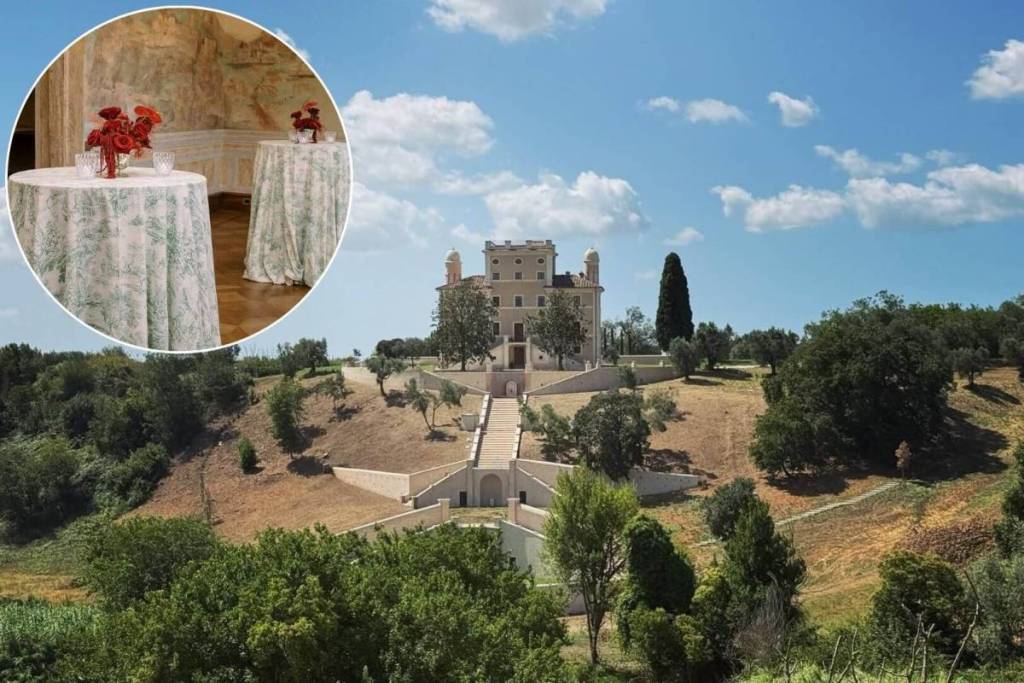

There is a Baroque villa on a hill in western Rome, with St. Peter’s dome on the horizon, that almost no one has ever seen. It is called Villa York; it was built in 1647 and for decades remained a forgotten ruin in the Valle dei Casali Nature Reserve, between Bravetta and Casaletto.
Now, following a restoration project that began in 2022, it will come back to life in 2026. The LDC Hotels group—the same group behind the neighboring A.Roma Lifestyle Hotel—is bringing it back to life.
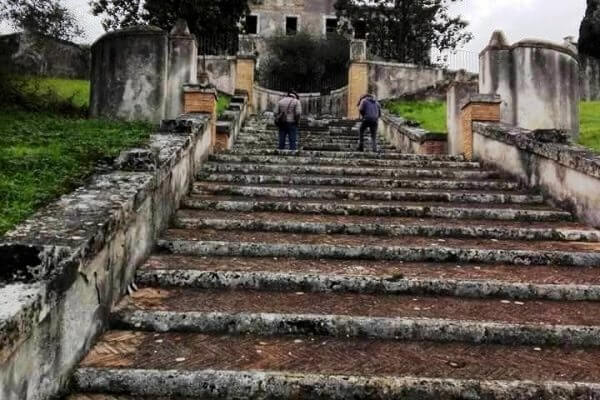
The restoration has revitalized the entire complex: the 17th-century villa, the Casale Stuart, the nymphaeum with its ancient stone staircases, the Troiani Chapel, and one of the most beautiful parks in the Roman countryside, set within an estate spanning over forty hectares of greenery.
The name comes from Cardinal Enrico Benedetto Stuart, Duke of York, the last Catholic heir to the English throne, who purchased it in 1804. Before that, it was Villa Baldinotti: its history dates back to 1647, when Zenobio Baldinotti acquired the “Casal di Marcello” farmstead and began planning the residence, which was then built over the following decades. Three centuries of changing ownership among noble Roman families.
There’s also a detail that few people know: this villa served as a film set. In the fall of 1936, *Il fu Mattia Pascal* was filmed here— Pierre Chenal’s 1937 film based on Pirandello’s novel—and some still remember the spectacular staircase and the nymphaeum’s fountain, “still in working order,” as they appeared in the film’s shots.
And hidden beneath the Baroque façade lies an even older Rome. Embedded in the perimeter wall is a Roman altar, recovered from the ruins of Lucius Fabius Pollio’s villa in the area now occupied by Forte Bravetta; the estate even preserves an underground cistern dating back to the Imperial era.
An important clarification: Villa York is not reopening as a public park
Villa York is reborn as an exclusive venue for events (weddings, galas, corporate receptions) with no admission tickets or set opening schedule. And here, an old issue resurfaces. When the estate was sold to private owners in 2017, citizens’ committees and environmental groups had hoped it would become part of the reserve’s public park; estimates of the value of the entire complex ranged from 6 to 9 million euros for over 400,000 square meters.
Beauty has returned, but behind a gate. A typically Roman ending: a recovered treasure, and the question of how much of it truly belongs to everyone.