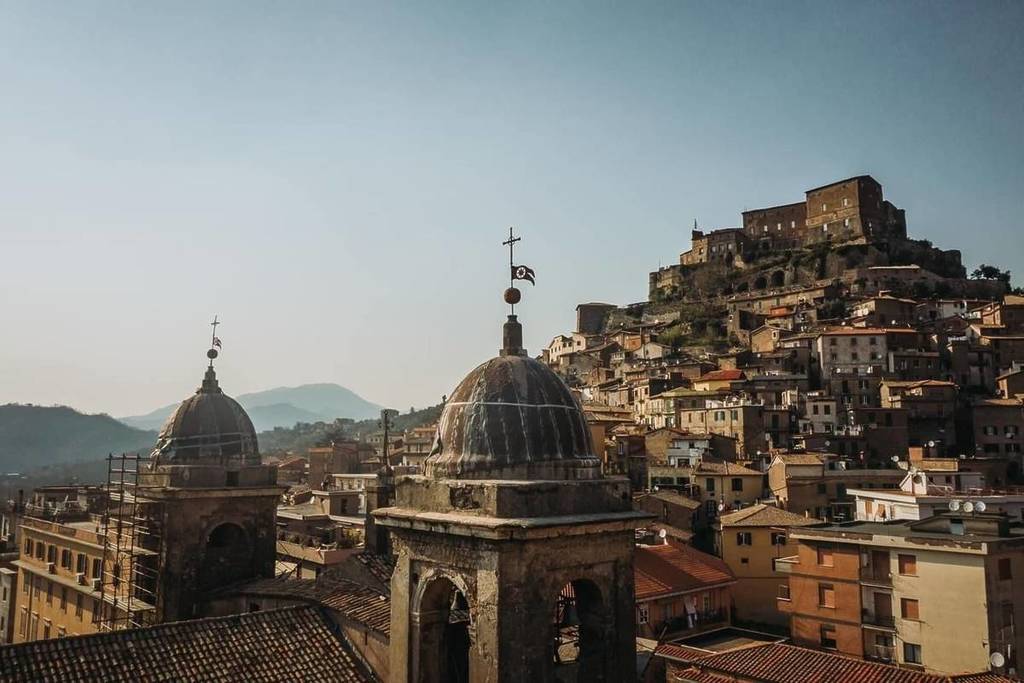
Imagine a secret place, nestled between mountains and forests, where it is said one can touch “the threshold of Paradise.” Here monks have kept precious manuscripts for centuries and, in a small printing press, the first printed book in Italy saw the light of day. A village that forever changed the history of culture, and in 2025 returned to the center of international attention.
That village is Subiaco, now the Italian Book Capital 2025.
Subiaco, the Italian Book Capital 2025 just an hour from Rome
Just over an hour from the capital, Subiaco is the perfect destination for a cultural jaunt out of town. Surrounded by the Simbruini Mountains and crossed by the Aniene River, it is a medieval village that holds a unique heritage in Italy. It was awarded the title of Italian Book Capital in 2025, confirming its identity as a city of monasteries and culture.
The City of Monasteries and the charm of the Sacro Speco
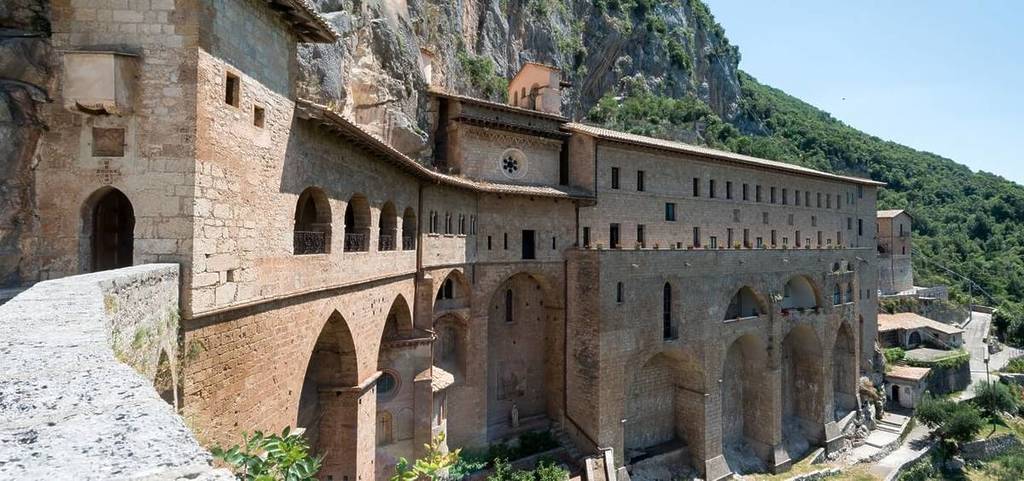
Subiaco is known as the City of Monasteries thanks to two extraordinary places: the Monastery of St. Scholastica, with one of the richest monastic libraries in Europe, and the Sacro Speco, set in the rock and defined by Petrarch as “limen paradisi,” the threshold of Paradise. They are pilgrimage destinations, but also true artistic and historical gems, ideal for those who love to combine spirituality and beauty.
The first book printed in Italy: the revolution born in Subiaco
In 1465, two German printers – Arnold Pannartz and Konrad Sweynheym – chose Subiaco to print the first book in Italy. A little-known but crucial record: this was where the spread of printing in our country began. In 2025 this historical detail is the focus of exhibitions and events celebrating the village’s revolutionary role in cultural history.
The “Threshold of Paradise” project: books, innovation and new technologies.
Winning the title of Italian Book Capital 2025 came with the “Threshold of Paradise” project, which combines tradition and the future. The idea is to relaunch Subiaco as a cultural hub through:
- multimedia and interactive exhibitions;
- workshops for students and families;
- reconstruction of the 15th-century printing press;
- performances and readings in the squares;
- inclusive routes with audioguides and accessible books.
A project that enhances the village’s book heritage by making it alive and participatory.
Events 2025 in Subiaco: festivals, exhibitions and must-see events
The 2025 calendar of activities set up in Subiaco was full of appointments that transformed the village into a great cultural stage. There have been book festivals, conferences with writers, theater performances and concerts, as well as bookcrossing days and reading initiatives in schools. Each month offered an opportunity to discover the city from a new perspective, combining tourism and culture.
Check the official website for the initiatives you can still participate in, taking advantage of the last months of celebrations that see Subiaco as Book Capital 2025.
Why visit Subiaco: between nature, spirituality and cultural tourism

Subiaco is not just about culture: the village is surrounded by unspoiled nature, which has given it the title of the “Caribbean of Rome.” Not only that, the area is ideal for trekking and walking along the paths of the Simbruini Mountains.
In Subiaco you can breathe in the spirituality of the monasteries, but also the authenticity of a medieval historic center that has remained intact.
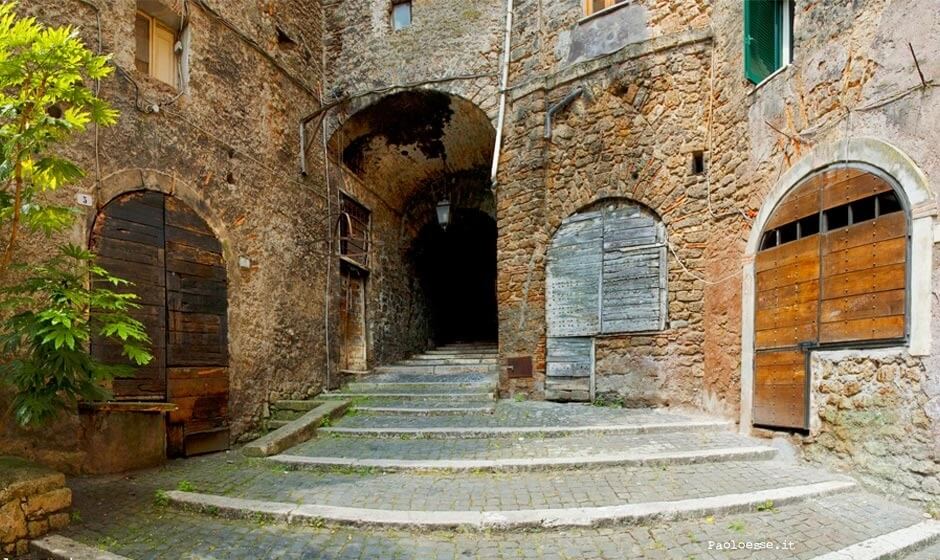
For those living in Rome or visiting the capital, this is the perfect trip to combine relaxation, art and history.
A village near Rome to experience year-round
If you live in Rome or Lazio, this is the perfect opportunity to discover Subiaco: its monasteries, libraries, views and events for 2025 that you can still attend.
Those who pass through its doors, today as in the 15th century, have the feeling of truly entering a threshold of Paradise.
How to get to Subiaco
Reaching Subiaco from Rome is quick and easy. By car, just take the A24 highway to Vicovaro-Mandela and then continue on the Tiburtina Valeria state road for about 20 kilometers. Alternatively, you can opt for the train to Tivoli or Mandela-Vicovaro and from there take a Cotral bus to Subiaco.
The trip takes an average of an hour and a half and allows you to immerse yourself already along the way in the green landscapes of the Aniene Valley.