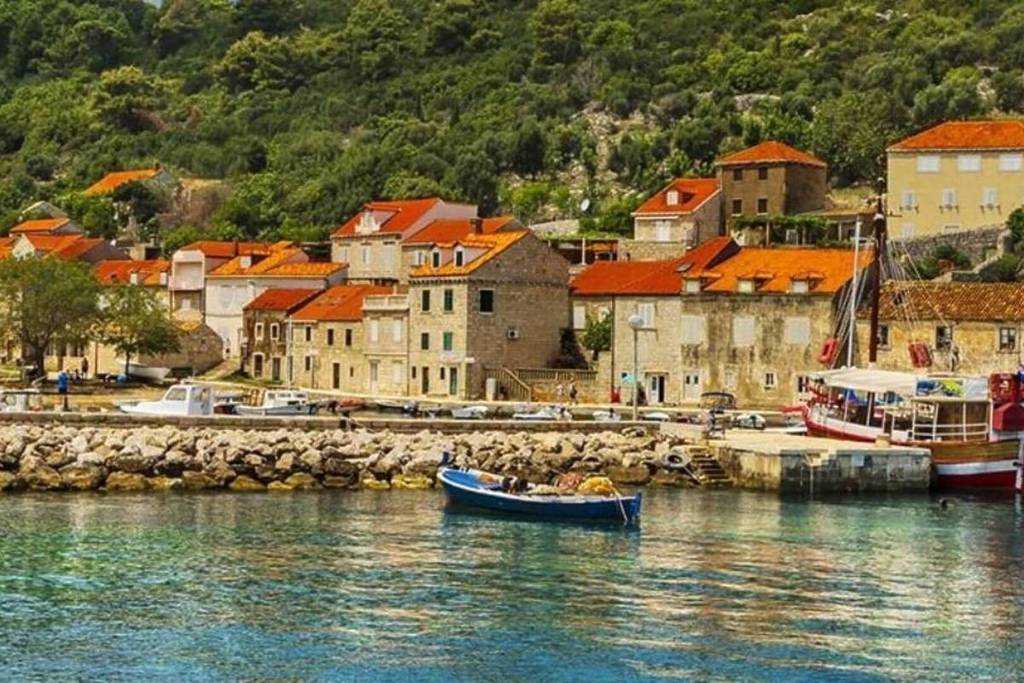

If you’re already thinking about summer, you should know that less than four hours by plane and ferry from Rome lies an Adriatic island with a Guinness World Record, 15th-century noble palaces, and bays where silence is still a tangible reality. No resorts, no artificial boardwalks, no all-inclusive packages. It’s called Šipan, the largest of the Elaphiti Islands, and it’s just a short ferry ride from Dubrovnik.
Šipan: the island that chose not to become famous
Sixteen square kilometers of light-colored stone, olive trees, vineyards, and two small villages separated by a fertile valley. Šipan has no airports, no hotel chains, and has never focused on mass tourism.
Yet, those who visit it—especially between May and June or in September—tend to return. The combination of quality and tranquility is hard to find elsewhere in the eastern Adriatic.
For those who live in Rome and every August must choose between the GRA on Friday night, a week at Circeo already booked by everyone, and Fiumicino as crowded as Termini, Šipan is a concrete answer: where to go on vacation this summer without giving up the real sea, without following the herd.
With summer flights from FCO to Dubrovnik already operational for summer 2026 and ferry bookings to the Elaphiti Islands filling up starting in June, now is the right time to make your plans.
A Guinness World Record (and it’s not what you’d expect)
When it comes to records and Mediterranean islands, one immediately thinks of figures related to tourism or gastronomy. Šipan, however, holds the record for the highest concentration of olive trees relative to its available land area.
The valley connecting the island’s two ports—Suđurađ to the east and Šipanska Luka to the west—is literally a landscape of olive trees. Dry stone walls, red earth, vineyards, fig trees, and cypresses complete a picture that, in some ways, recalls the countryside of Sabina or Ciociaria in Lazio, but with the Adriatic Sea all around.
Traveling that stretch on foot or by bike is not just an excursion: it is physically understanding why this place has earned a spot in the record books.
What to see on Šipan: history, stone, and silence
Suđurađ, the port of the shipowning families
Suđurađ is the first port of call for many visitors. The sheltered bay, protected from the western winds, is dominated by the Renaissance towers of the Skočibuha family, one of the most influential maritime dynasties of the Republic of Ragusa in the 16th century.
The complex was built on the site of an ancient shipyard, from which numerous vessels of the Ragusan fleet set sail. The Vice Stjepović Skočibuha Palace — with its symmetrical façade, arched windows, and inner courtyard—is among the finest examples of Renaissance civil architecture in the entire archipelago.
Šipanska Luka and the Rector’s Palace
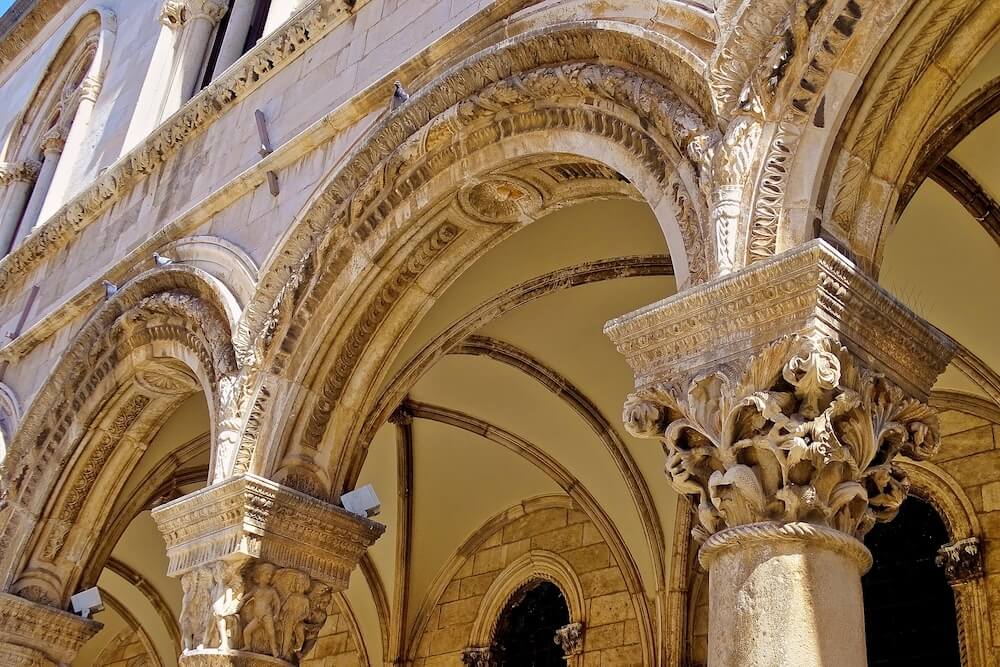
On the opposite side, Šipanska Luka opens up like a long, deep inlet that resembles an alpine lake more than a sea bay. A striking visual effect for those arriving from the open sea.
Above the harbor stands the Rector’s Palace, built in 1450 in the late Gothic style: it was the administrative center of the Republic of Ragusa on the island. A short distance away, the church-fortress of the Holy Spirit reveals loopholes, thick walls, and defensive proportions—a place designed for prayer and, if necessary, to resist incursions from the sea.
Velji Vrh, the highest point
At 243 meters above sea level, Velji Vrh is the highest point on the island and the entire archipelago. The trail winds through Mediterranean scrub, wild thyme, and rosemary. From the summit, on clear days, you can see Lopud, Koločep, Mljet, and the long line of the Pelješac Peninsula.
Šipan and the Republic of Ragusa: a noble island
Šipan is closely linked to Ragusa, the ancient city-state that dominated Adriatic trade for centuries, until Napoleon decreed its end in 1808.
The patrician families of Ragusa used the Elaphiti Islands as a summer resort and a place to maintain their social standing. The villas and palaces on Šipan were not just any second homes: they were statements of power, buildings constructed to last.
As the largest island in the archipelago, Šipan became the seat of the Rector, the official who represented Ragusa in its dependent territories. The 1450 palace in Šipanska Luka, in addition to being a fine medieval building, is proof that this small island was, in the 15th century, a major administrative hub of one of the most sophisticated mercantile republics in the Mediterranean.
Is a weekend enough, or do you need a week?
Three nights on Šipan is plenty: leave on Friday evening and return on Monday morning. The trip is short, the island is small—you can explore the main sights in two days—and accommodations (rental apartments and small family-run guesthouses) fill up quickly during peak season: it’s best to book in advance.
For those who want to combine Šipan with Dubrovnik (a UNESCO World Heritage Site less than 80 minutes away by ferry) or explore the other Elaphiti Islands, a week is the ideal length of stay. Prices on the island are generally significantly lower than on the more famous Dalmatian coast: a real advantage for those traveling from Rome on a budget.
How to get there from Rome
✈️ By plane + ferry — about 4 hours (recommended option)
Direct flights depart from Fiumicino (FCO) to Dubrovnik (DBV) with several airlines: Ryanair, Croatia Airlines, and Vueling, with an average flight time of about 1 hour and 15–20 minutes.
Upon arrival in Dubrovnik, a public bus or taxi reaches the port of Gruž in about 30–40 minutes. From Gruž, Jadrolinija ferries connect the Elaphiti Islands year-round: the crossing to Šipan takes between 45 and 80 minutes, with some trips making intermediate stops at Koločep and Lopud. Many trips end at Suđurađ, while some continue on to Šipanska Luka.
🚗 By car — for stays of a week or more
From Rome, the route to Dubrovnik stretches about 1,350 km through Slovenia and Croatia, with a driving time of 12–14 hours. It’s not the most logical choice for a weekend getaway, but it makes sense if you’re planning an extended vacation, with the option of leaving your car in Dubrovnik and then traveling by ferry.
📅 When to go
May–June and September–October remain the best times to visit: ideal weather, warm sea, and crowds kept to a minimum. July and August bring more activity to the ports, but Šipan retains a surprising calm compared to the more famous Dalmatian coast. In any case: book ferries and accommodations in advance during high season.