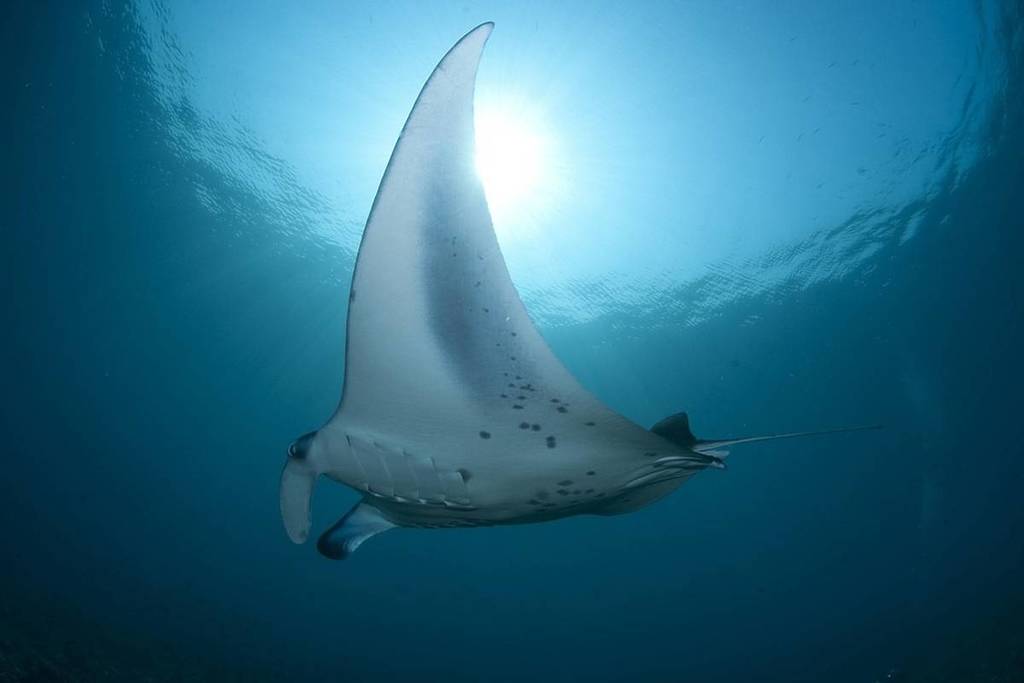
Manta rays, so-called Sea Devils, are harmless animals, one just has to be careful of their stinging tails. In fact, they are peaceful fish that attack only in threatening situations. Just think that there are 600 species of them!
So why the threatening nickname? “Sea devils” refers mainly to their physical appearance: the two cephalic, horn-like extensions on either side of their heads, their dark color, and their great breadth.
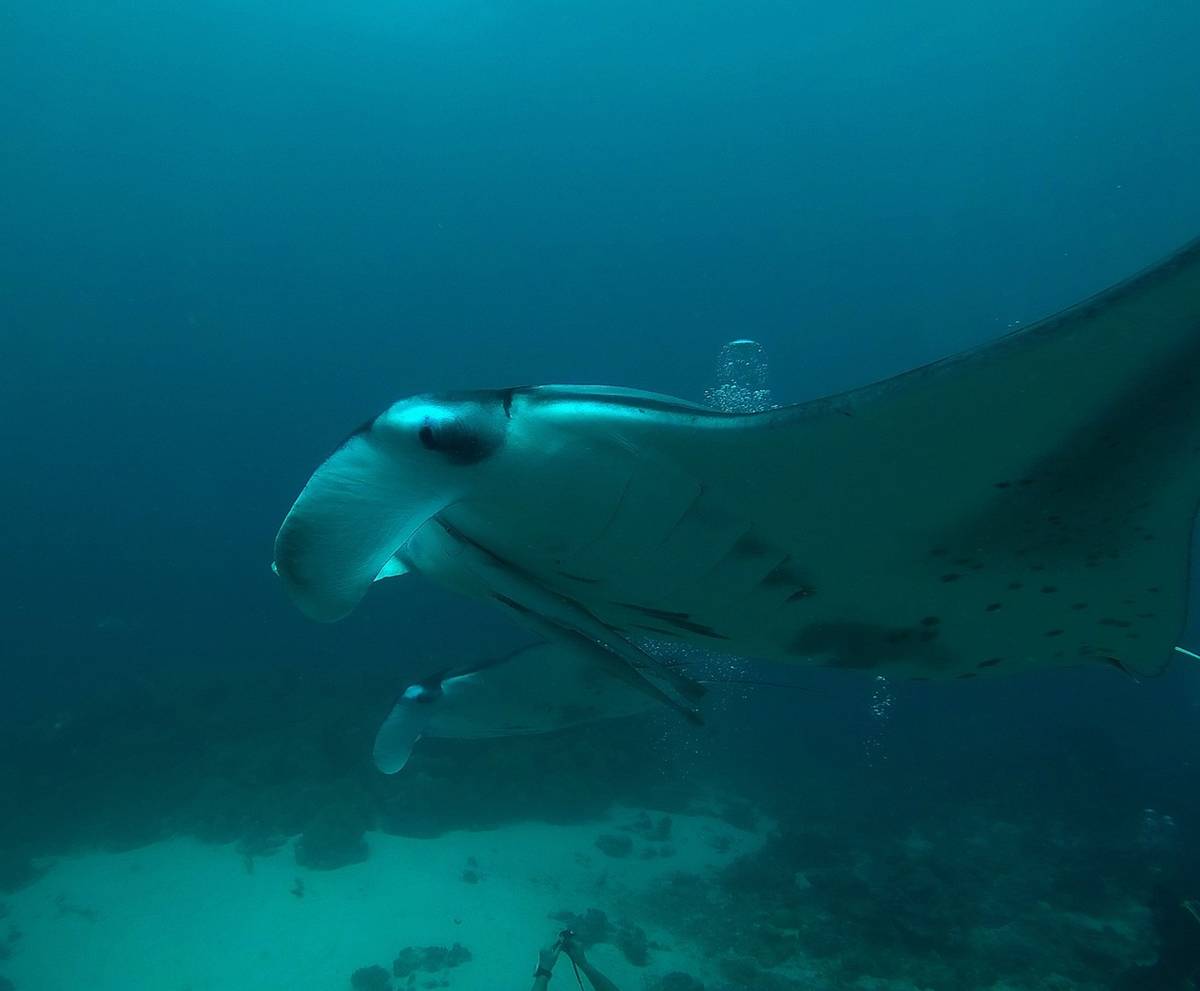
Emergence in the Mediterranean
An unprecedented manta ray stranding occurred in the Mediterranean in 2025, which is worrying the international scientific community. Since the beginning of May, more than 40 cases of Mediterranean manta ra ys (Mobula mobular, also known as “sea devils”) beached or in distress along the coasts of Italy, France and Spain have been recorded.
In Italy, since May 27, there have been at least 14 incidents including beached and attempted beaching, two of which were fatal to the poor fish.
The manta rays involved are deep-sea animals that normally avoid coastal areas. Their sudden presence near the shore and repeated beachings are phenomena considered abnormal and alarming. The specimens found often exhibit a state of emaciation: some had completely empty stomachs, but no signs of external injuries or direct interactions with humans were detected. Investigations are still underway to identify the exact causes.
Hypotheses include environmental changes, pollution or disease. The phenomenon is considered particularly serious because the Mediterranean manta ray is an endangered species.
Manta rays in Latium
Latium is washed by the Tyrrhenian Sea, which (remember) is the portion of the western Mediterranean Sea that reaches the coasts of Corsica and Sardinia. Those who say that it is not possible to see manta rays on the Latium coast are wrong. In fact, last summer off the coast at Ostia five large manta rays were spotted, and this year at Fiumicino one was released stranded in the shallow waters of the new dock.