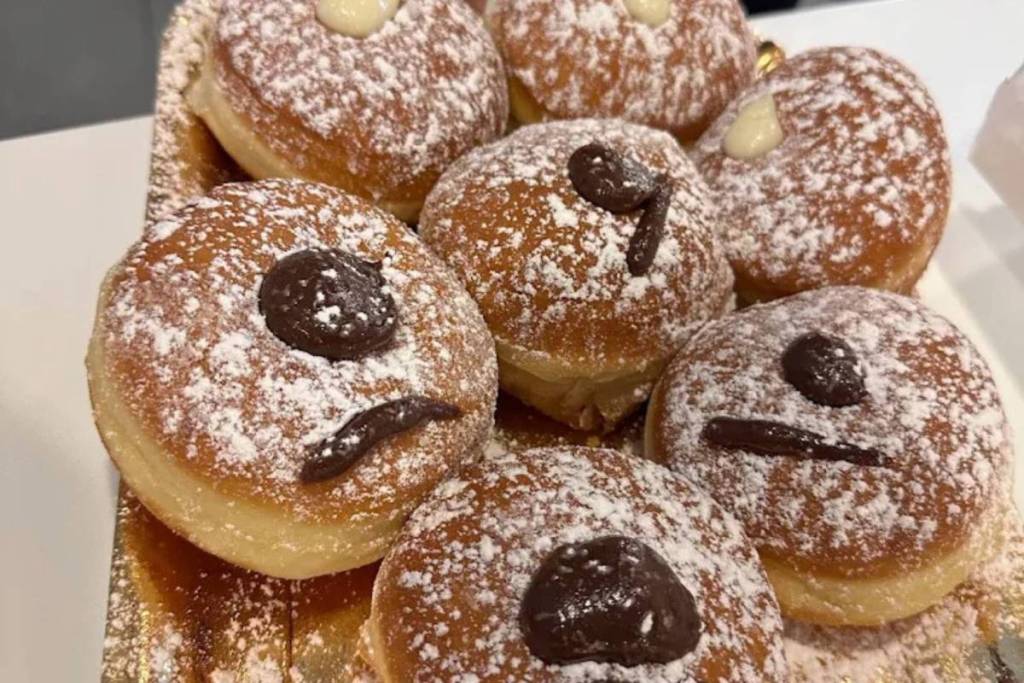

The Creme Caramel pastry shop is a true historic landmark located in the central area of Terracina, near the harbor. Although the shop is very small, often crowded, and has limited street parking, it’s considered a must-visit for the excellent quality of its products, made with fresh ingredients. The shop offers a welcoming atmosphere thanks to its consistently courteous and friendly staff, and since it stays open late and features a well-stocked café area, it’s the perfect spot to end the evening on a sweet note.
Le Bombe Fritte: The Pastry Shop’s Signature Dish
Its “bomba” is considered by many to be “out of this world” because the dough literally melts in your mouth, as some tasters say. A major plus is that they’re served warm not only in the morning but also in the evening.
The value for money is excellent and fair. A classic “bomba” (filled with cream, Nutella, orange, jam, or hazelnut) costs just 1.80 euros. The menu also offers plain versions (1.50 euros), “Bigusto Cream-Nutella” variations (2.20 euros), or rich fillings with cream and Nutella (2.60 euros). Classic fried doughnuts are also available for 1.70 euros.
In addition to its wide selection of “bombe,” the pastry shop bakes high-quality desserts, including cream puffs filled with Chantilly cream, cannoli, mini rum babà, sfogliatelle, croissants, and cakes for special occasions.
Where: Via Tripoli, 1/9, 04019 Terracina. Closed Mondays. Open Tuesday through Sunday from 7:30 a.m. to 1:30 p.m. and from 5:00 p.m. to 1:00 a.m.
The History of the “Bomba Fritta”
This irresistible dessert has ancient roots that extend far beyond the borders of Lazio, historically deriving from the Krapfen, a fried yeast dough pastry of Austrian origin. The krapfen was already very popular in the city of Graz around 1600, where it was sold piping hot on the street—especially during Carnival—and was originally filled with jam or marmalade.
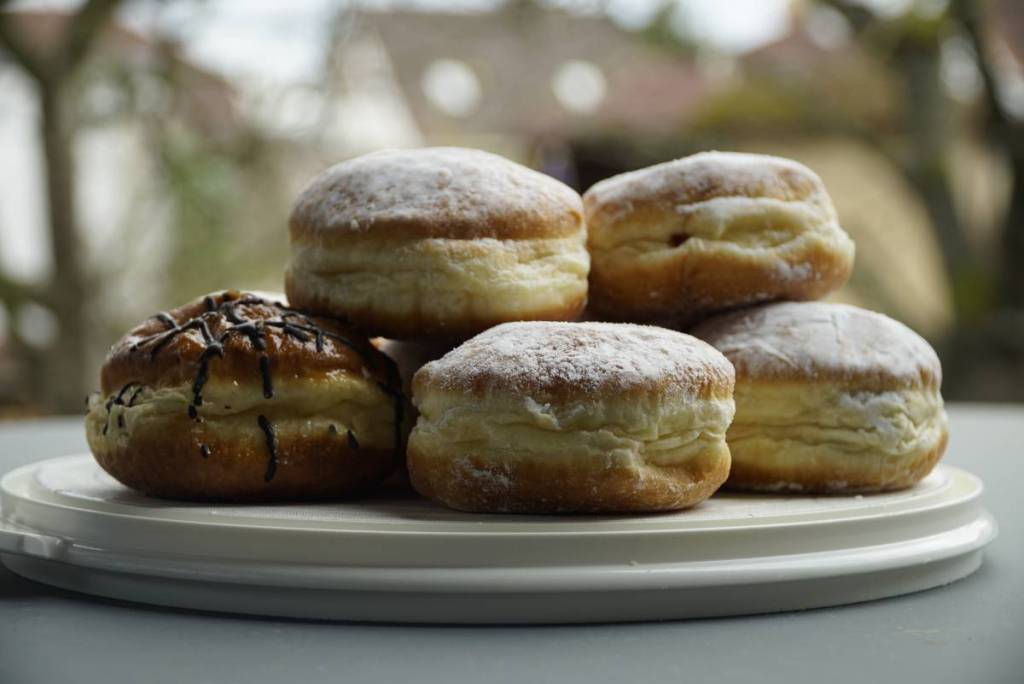
Over the centuries and under Habsburg rule, this delicious fritter crossed the Alps, spreading throughout northern Italy and down into Tuscany and Emilia-Romagna, where it took on the name “bombolone.” Upon reaching Rome and the rest of Lazio, the dessert was renamed “bomba.” Unlike the original Austrian recipe, which features jam and a “richer” dough, the Lazio and central Italian “bomba” is characterized by being filled with generous amounts of pastry cream or chocolate, making it the soft and indulgent masterpiece we enjoy today.