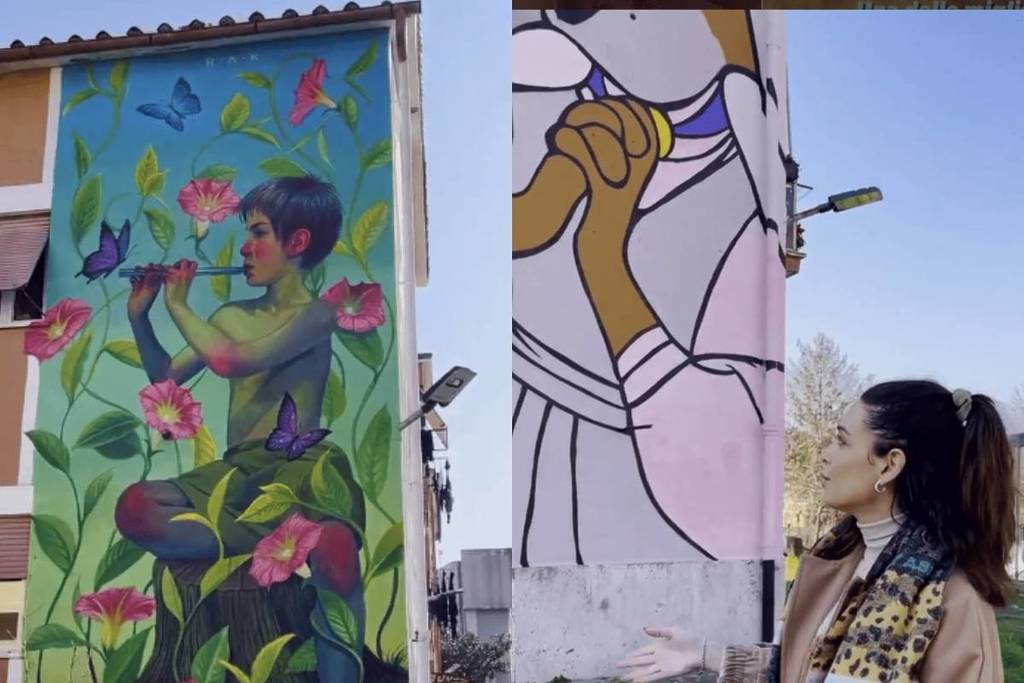
Rome hides treasures that go far beyond the Colosseum. In the Agro Romano, specifically in Settecamini, a new page has been written in the history of Roman street art that is every bit as impressive as more famous areas such as Ostiense. Thanks to the Street Art for Rights initiative, the neighborhood has become an urban gallery dedicated to the 17 goals of the UN 2030 Agenda.
Settecamini: the open-air museum that challenges pollution
These works are not just aesthetic, they are political and social manifestos created with special photocatalytic paints. Thanks to sunlight, these paints are able to absorb smog and transform it into harmless substances, making art literally ‘alive’ and environmentally friendly.
 © Secret Roma
The works and their meanings
The project, supported by Roma Culture and SIAE, has transformed walls into messages of hope and reflection:
- Defeating Hunger (Diamond): a work featuring an oriental woman. Here, rice is not only food, but a symbol of intellectual nourishment and cultural sharing.
- Defeating Poverty (Solo): through the myth of Robin Hood and Lady Marian’s worried gaze at the bounty on Robin Hood, the artist explores the gap between social classes and personal sacrifice for the common good.
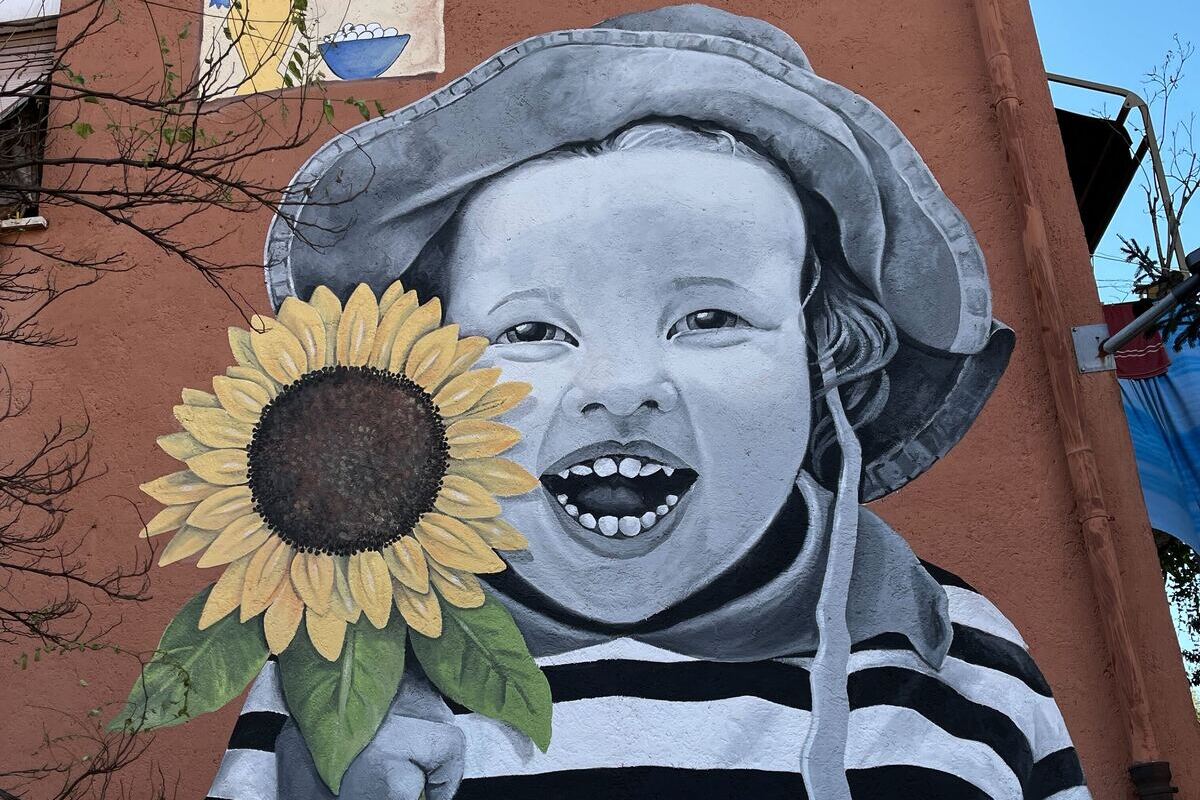
- Childhood (Tina Loiodice): the smiling face of a little girl next to a sunflower reminds us of the fundamental right of children to happiness and carefreeness.
- Sustainable Consumption (Etnik): with the work “La Casa nella Casa” (The House in the House), the emphasis is placed on household waste management and the need to recycle to protect the planet.
An expanding project
Settecamini is the beating heart of this redevelopment, but street art for human rights has already left its mark in other historic and suburban neighborhoods such as Corviale, Quarticciolo, and San Paolo, creating an urban network of awareness and beauty.