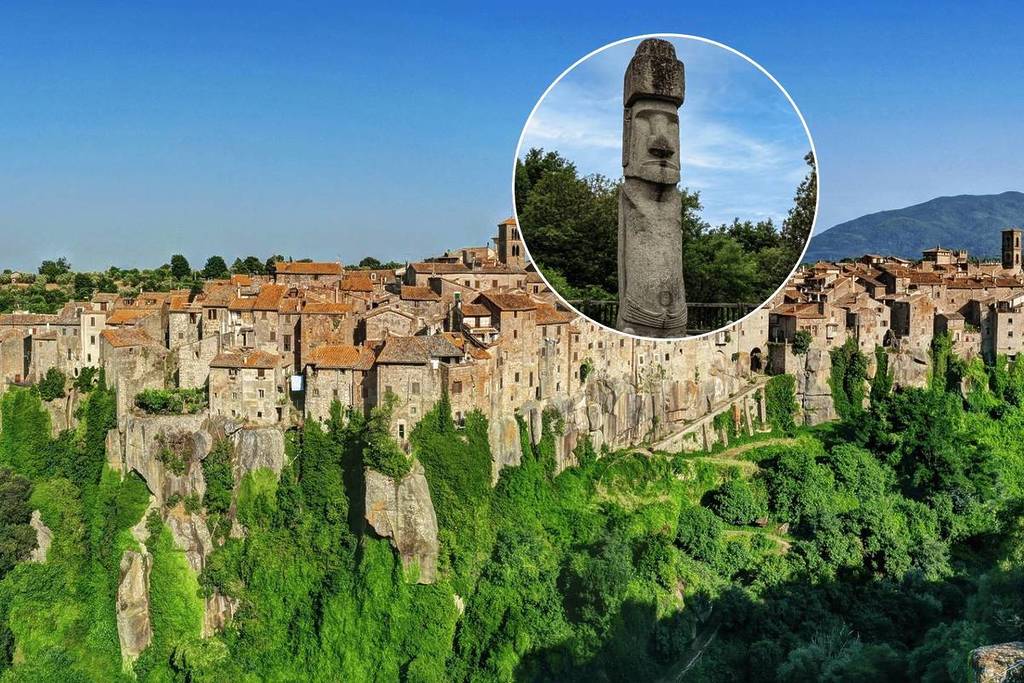

It was 1990 when some inhabitants of Easter Island came to Vitorchiano to promote the restoration of their ancient statues: the Moai. The Atan family, consisting of 19 people originally from Rapa Nui, created the first original Moai outside its territory at the Anselmi peperino quarry.
The construction of the MOAI and how to see it
90 km from Rome, in Vitorchiano, a statue over 6 meters long was unveiled. This town in Lazio welcomed the Rapa Nui family with great warmth; the clan was a direct descendant of the “long-eared men.” Every village had a Moai, and if it fell, the village was relocated because it was considered a bad omen.
The representatives of the thirteenth generation of long-eared men—as reported by RAI in the 1990s—know how to build the Moai and, above all, understand the profound significance they hold in the history and tradition of Easter Island.
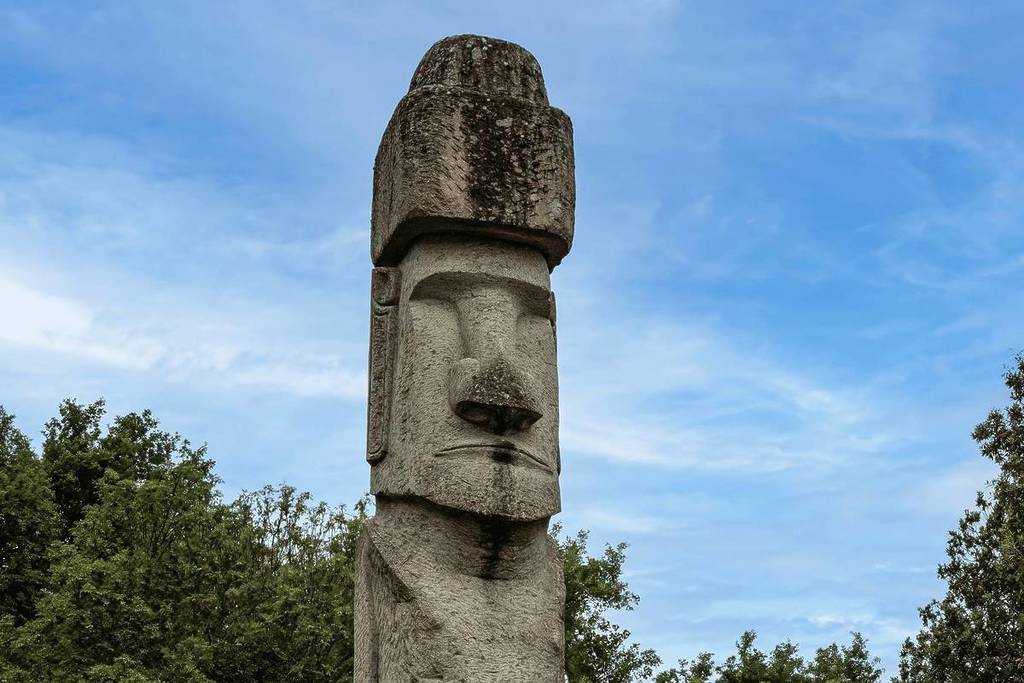
The local stone, called Peperino, was used for the construction, and although harder, it bears an extraordinary resemblance to the volcanic stone of Easter Island from which the original Moai are made. The same techniques and tools were used to create the statue.
The Moai was placed in the center of Piazza Umberto I (later moved). From that moment on, there was a constant stream of tourists coming to admire the stone giant and to get close enough to touch it; according to ancient beliefs, whoever stroked its navel could receive good fortune.
Where: Strada Provinciale 23 della Vezza, 19, 01030 Vitorchiano (VT).
Fun fact: in 1267, Vitorchiano swore eternal loyalty to Rome. At the entrance, you’ll find the Statue of Marzio, a young shepherd who, according to legend, ran all the way to Rome to warn of an imminent attack by the people of Viterbo, saving the city.