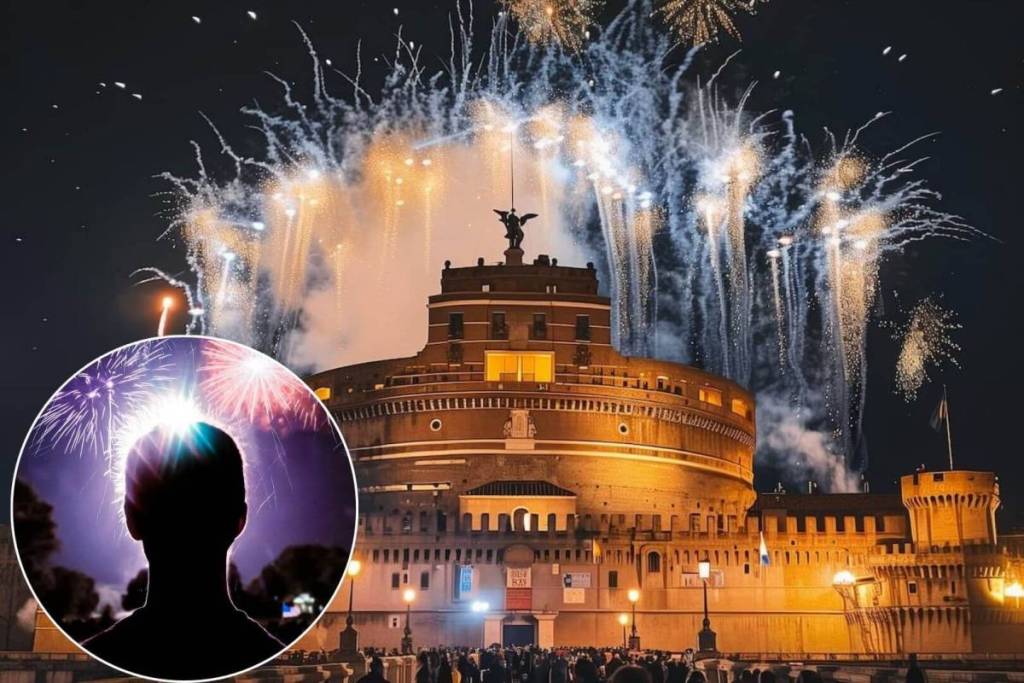

On Monday, June 29, 2026, the Girandola at Castel Sant’Angelo returns—one of the oldest fireworks displays in the world. The event takes place at 9:30 p.m. on the Tiber, free of charge, on the feast day of the patron saints, Saints Peter and Paul.
And this year, there’s one detail that makes all the difference: the festival falls on a Monday, creating a three-day weekend that, in Rome, feels like a sort of early Ferragosto, with the city emptying out during the day and filling up along the Tiber after sunset.
No tickets, no lines: all you need is a good spot on the bridges and the evening ponentino breeze that cuts through the sweltering heat.
A free show (and the best spots to really see it)
Let’s start with the news that matters most: the 2026 Girandola at Castel Sant’Angelo is free. No tickets, no lines at the box office. The fireworks are launched from the Terrazza dell’Angelo and can be enjoyed from the street—just pick your spot wisely.
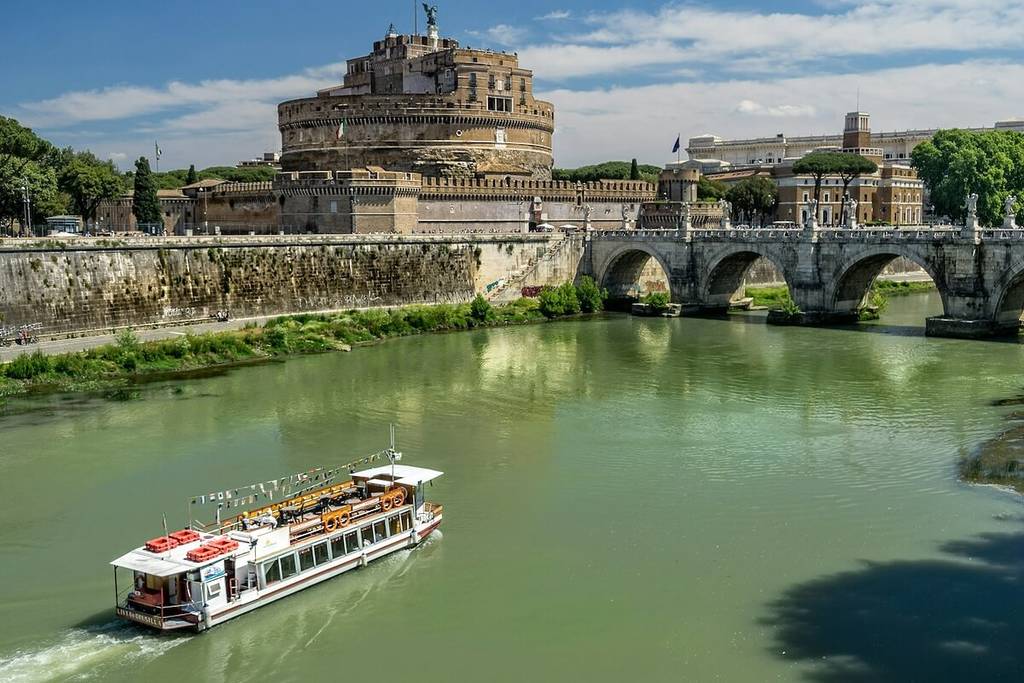
The spots recommended by the organizers are the Lungotevere Tor di Nona and the bridges framing the Castle:
- Vittorio Emanuele II Bridge,
- Umberto I Bridge
- and, of course, Ponte Sant’Angelo.
From here, you have the monument right in front of you and the reflection of the fireworks on the river—which is half the show.
The moment to look forward to is the finale: a cascade of sparks that seems to envelop the entire castle in an embrace of light. That’s when the applause begins.
Why June 29th, exactly: the festival that brings the city to a standstill
If, as a child in Rome, your parents didn’t go to work on June 29, now you know why. It’s the feast day of Saints Peter and Paul, the city’s patron saints, and it’s a holiday only here: offices and many stores close, while the rest of Italy works.
That’s why La Girandola isn’t just “another summer event.” It’s a religious celebration turned into a spectacle, an occasion that Romans have felt was their own for generations, taking place in Borgo, Prati, and the historic center—which empties out and fills up again as evening approaches.
In 2026, the festival falls on a Monday: that means a long weekend, dinner out, and then everyone heads to the Tiber. Among Rome’s June events, this is the one that appeals to both those seeking tradition and those simply looking for a great evening at no cost.
From Michelangelo to Bernini: centuries of fireworks brought back to life
Rome’s most famous fireworks display dates back to 1481, under Pope Sixtus IV. Since then, the Girandola has lit up the city’s major celebrations for centuries, chronicled by engravers, poets, and writers who came from all over Europe just to see it.
Behind these “festive spectacles” were names you might not expect: Michelangelo Buonarroti and Gian Lorenzo Bernini, who added colors and movements to the light show—inspired, in fact, by the eruptive force of volcanoes. Not mere fireworks, but true ephemeral works of art drawn across the sky.
The show was suspended in the late 19th century, when the force of the explosions threatened to damage the castle’s interiors. It returned in 2008 thanks to the historically accurate reconstructionby architect Giuseppe Passeri with the Gruppo IX Invicta; after a brief stint on the Pincio Terrace, it has been back at its home, Castel Sant’Angelo, since 2021.
How to get to Castel Sant’Angelo for the Girandola
On the evening of June 29, the area around the Castle is closed to traffic, and several bus routes are rerouted, usually starting in the late afternoon. In other words: forget about driving and take public transportation.
(Detailed detour information will be released closer to the event date: check for updates from ATAC and Roma Mobilità.)
🚇 By Metro — This is the safest option for the evening. Take Line A to the Lepanto stop: from there, it’s about a 10- to 15-minute walk through Prati to the Tiber. Alternatively, get off at Ottaviano, which is also convenient for those coming from the Vatican area.
🚃 By tram — Line 19 stops at Piazza del Risorgimento: a ten-minute walk and you’re at the Castle.
🚆 By train — Roma San Pietro Station (lines FL3 and FL5), about a 15-minute walk along Via della Conciliazione.
🚌 By bus — On regular days, lines 23, 40, 62, 64, 280, 982, and others stop at Piazza Pia and the surrounding area, but on the evening of the event, many skip the stop or change their route: if you choose the bus, keep this in mind and check before heading out.
🏃 On foot — If you’re already in Piazza Navona or the Pantheon area, walking across Corso Vittorio Emanuele II is the best option and will spare you any stress related to public transportation and detours.