
Giacomo Balla’s furniture is coming home. On October 12, the Ministry of Culture announced the purchase of the furnishings from the Studiolo Rosso and 45 other pieces, including artworks and furniture.
They are destined for Giacomo Balla’s apartment at Via Oslavia 39B, in the Della Vittoria neighborhood, where the master of Futurism lived from 1929 to 1958.
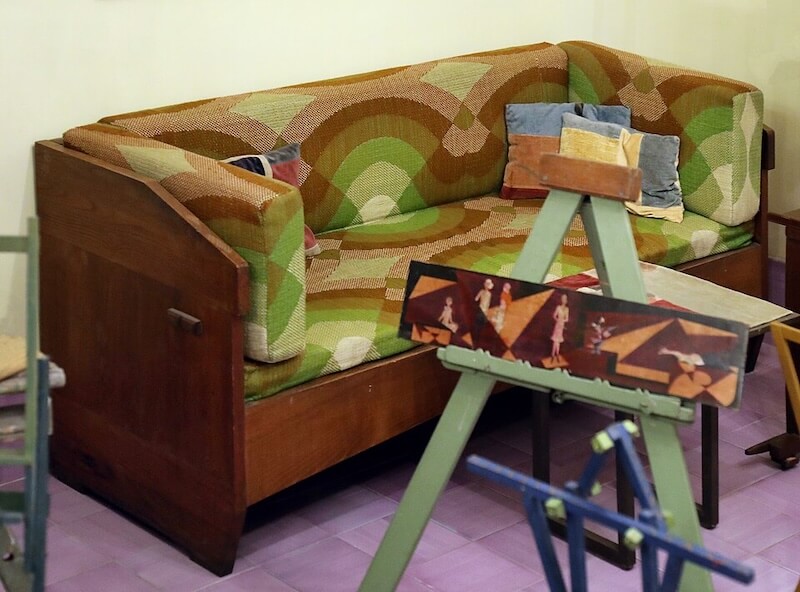
The reason this matters is simple. Balla had designed and built almost everything with his own hands: furniture, walls, lamps, and even clothes.
After his death, many of these pieces were divided among his heirs, and now they are returning to the rooms for which they were created, in anticipation of the house-museum’s reopening—though no date has yet been set.
How much is Casa Balla worth? 6.9 million, but the walls alone are worth only 900,000
In October 2025, the government purchased the Futurist house in Rome for 6.9 million euros, including copyrights.
Only 900,000 are for the property itself; the remaining 6 million cover the works of art and furnishings.
So we’re not talking about Rome’s most expensive villas, nor even a penthouse in Parioli. In 2021, in the same building, a 220-square-meter apartment was on the market for 825,000 euros.
Among the capital’s million-dollar homes, Casa Balla stands out for what’s inside, not for its square footage.
The Red Study and Elica’s Bedroom: The Furniture Returns to Via Oslavia
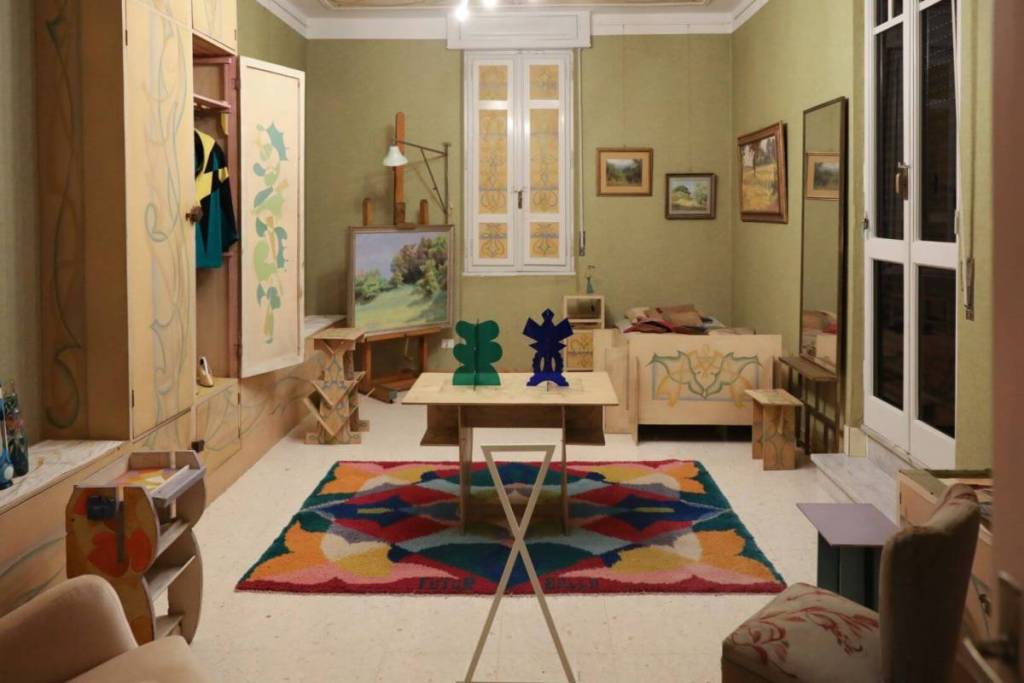
The Studiolo Rosso was Balla’s think tank: a small room with a window overlooking the internal staircase, walls and ceiling entirely painted, filled with paintings, stools, and books.
On one wall, there is still an old fire department number, engraved by Elica, his youngest daughter. The fire station, incidentally, is still there just a few meters away.
The 11 pieces from the Yellow and Green Room, on the other hand, have had two lives.
In Parioli, they were in the dining room; at Via Oslavia, they become Elica’s bedroom.
The bed and the sideboard are returning to the room where, today, there is the painted loft that she had built in the 1960s.
Handmade Chairs, Lamps, and Clothes: How the Futurist House on Via Oslavia Came to Be
When the Ballas arrived here in 1929, the Della Vittoria neighborhood was still under construction. Balla took the manifesto he wrote with Depero in 1915 literally: “to rebuild the universe by bringing joy to it.”
And it starts with his home: chairs, tables, ashtrays, clothes, even an easel made of bamboo canes.
The neighbors had a hand in it, too. Whenever a building went up next door, they bricked up one of Balla’s windows. In exchange, he got a tiny room so noisy that it was renamed the “room of perpetual noises.”
When will Casa Balla reopen, and what do we know so far?
After the deaths of Elica and Luce in 1993 and 1994, the house remained closed for 27 years. MAXXI opened it to the public for the first time in 2021, and today it has become a national museum.
Before the furnishings can be returned, the purchase agreements must undergo a final review by the regulatory authorities.
When it reopens, it’s worth booking a visit right away.
Among the artists’ homes that have become museums, this is one of the few where art isn’t hanging on the walls—the walls themselves are the art.