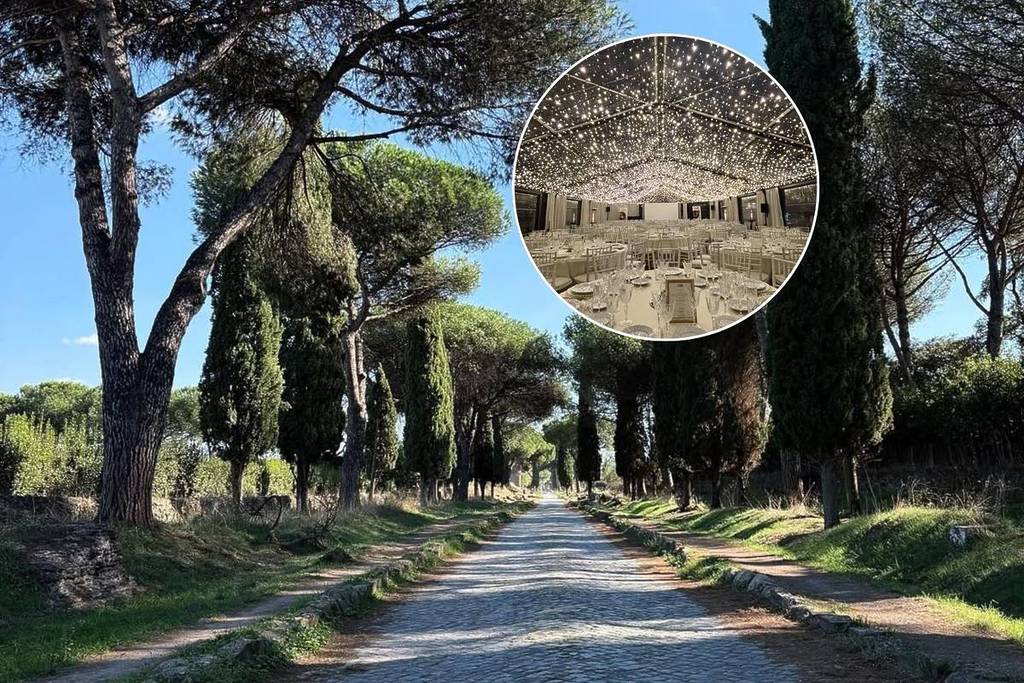
Located in the heart of an archaeological area in Rome, recently designated a UNESCO World Heritage Site for its historical treasures, this villa is a true hidden gem. As beautiful as it is exclusive, for just a few summer evenings each year it transforms into a stage under the stars for evocative classical concerts. Over time, this residence has become a landmark for upscale events, combining the villa’s refined elegance with the classic archaeological charm that envelops every corner of Rome.
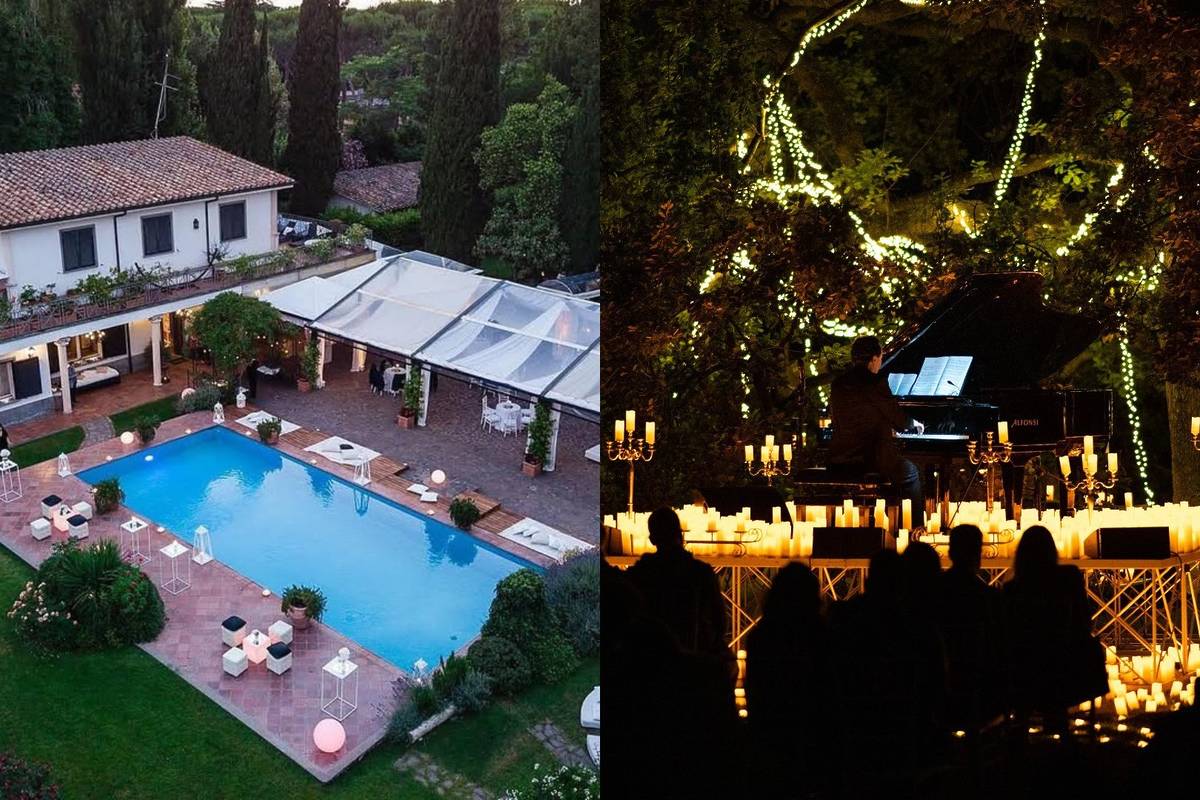 Photos: (right) @candlelight.concerts on Instagram / (left) @
villa_appia_antica_roma on Instagram
A luxury villa amidst centuries-old trees and historical artifacts
A luxury villa nestled in a centuries-old park, available for exclusive use for just one event per day. It is the ideal setting for weddings, receptions, and events seeking to combine elegance, privacy, and historical charm. Surrounded by an enchanting garden dominated by a majestic oak tree, the villa welcomes guests into refined and versatile spaces: elegant indoor halls, a pool with a lounge area, and a bright Winter Garden capable of hosting over 280 guests in every season, always maintaining a view of the precious historical and architectural artifacts that surround it.
During the summer, Villa Appia Antica, nestled in the heart of the Appia Antica Archaeological Park, transforms into an enchanted stage for the exclusive Candlelight concert series. The villa’s garden is illuminated by thousands of candles, while on an elegant raised stage a string quartet or pianist performs unforgettable classical tributes to great Italian and international artists. A refined and magical event, perfect for unforgettable evenings. Tickets for the 2026 series are already available!
📍Where: Via Appia Antica, 288A / Rome – 00178
🚗How to get there from central Rome(Approx. 30–35 minutes by car)
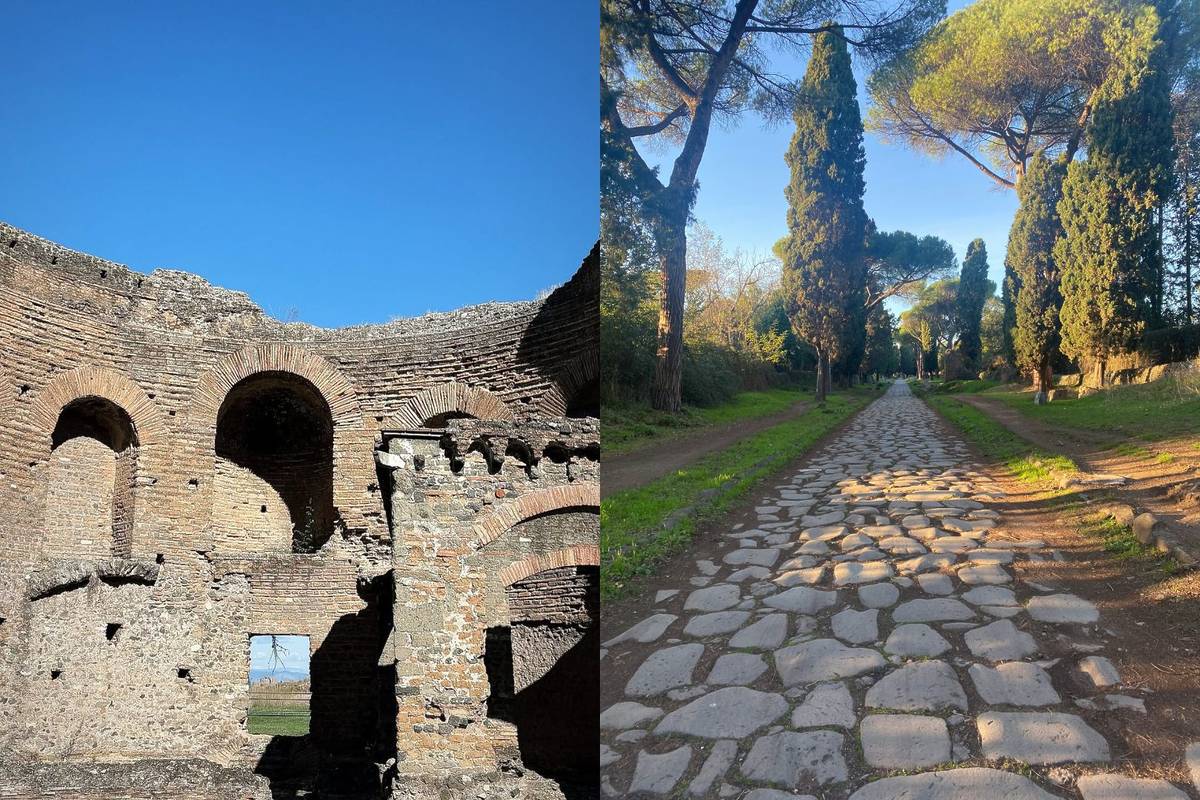 Photos: (left) @dinemafine on Instagram / (right) Mike Chsrisemer on Unsplash
A bit of history about the archaeological park
The Appia Antica Archaeological Park is a large archaeological area in Rome, stretching along the Via Appia Antica, known as the “Regina Viarum. “ Since 2024, various sections of it, particularly between the 1st and 13th miles, have been included in the UNESCO World Heritage Site known as the “Via Appia.”
Established in 2016 by the Ministry of Cultural Heritage and Activities and Tourism (MiBAC), its purpose is to protect and promote this vast area rich in monuments and archaeological sites, including the state-owned section of the Via Appia Antica, the Aqueducts of the Acqua Claudia, Acqua Marcia, and Anio Novus, and the Church of San Cesareo de Appia.
The original idea for a large park, stretching from Trajan’s Column to the Castelli Romani, dates back to the Napoleonic period (1809–1814), when Rome was part of the imperial department. However, it was Pope Pius IX, in the mid-19th century, who implemented a vast restoration plan for the Appian Way. Eager to highlight the basilicas and catacombs, he entrusted the work to the Piedmontese architect and archaeologist Luigi Canina, who between 1851 and 1855 transformed the Regina Viarum into an archaeological promenade.