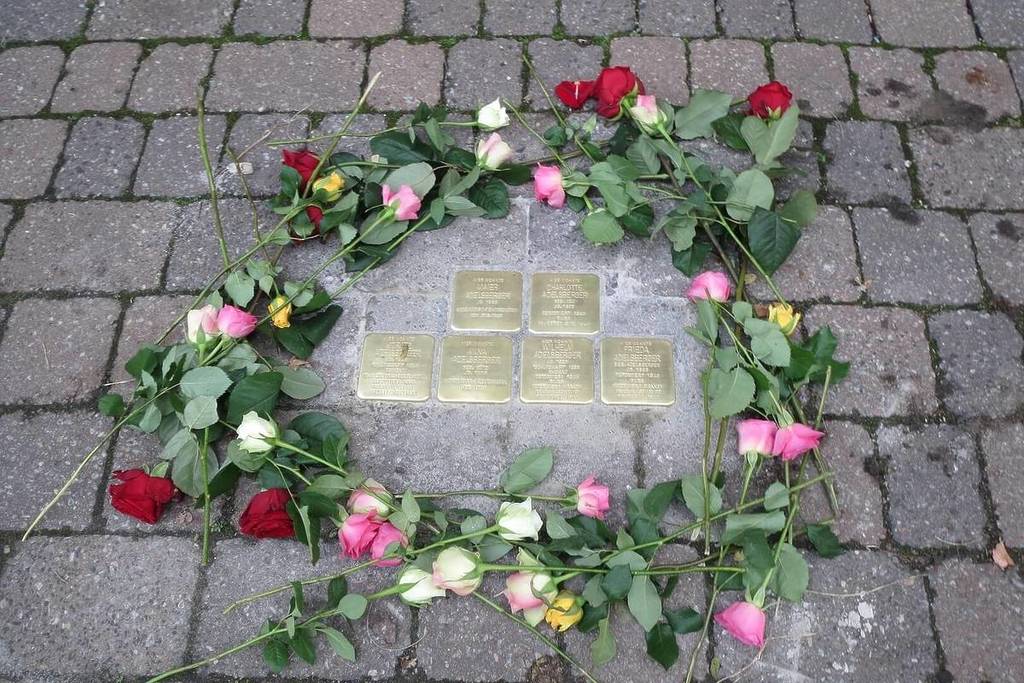
Rome’s Stumbling Stones represent a silent but powerful memory, scattered in the cobblestones in front of homes, schools, synagogues and everyday places. More intimate than any monument, these small brass plaques carry engraved names, dates, destinies: interrupted lives that resurface and hold us step by step. In 2025, Rome officially welcomes 482 Stumbling Stones, an urban memorial unparalleled in Europe.
The history of the Stumbling Stones.
The Stolpersteine(Stumbling Stones) project was born in 1992 by German artist Gunter Demnig, with the intention of bringing to light the memory of the victims of Nazi-Fascism through a simple but impactful gesture: placing small blocks covered with a brass plate in the sidewalks, each engraved with the name, year of birth, date of deportation and, if known, date of death.
The first laying took place in Cologne, Germany, and since then the initiative has spread throughout Europe to become the largest widespread memorial on the continent. Today there are more than 90,000 Stumbling Stones distributed in more than 30 countries, from historic capitals like Berlin, Vienna and Paris to smaller cities but equally marked by the tragedy of the Shoah.
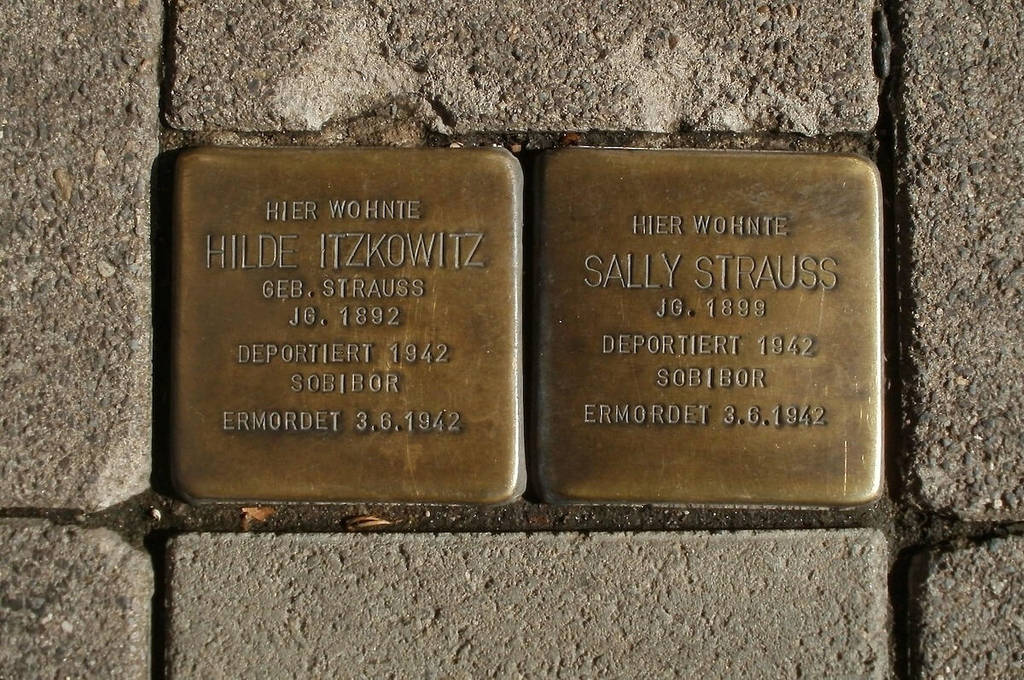
Rome welcomed the project in 2010, thus joining this international network of shared memory, which continues to grow every year.
Memory trail through Rome’s neighborhoods
Discovering these stones means walking through the heart of Rome’s civic memory. Here is an itinerary divided by municipality:
- Ghetto and Historic Center (City Hall I)
This is where Rome’s Jewish memory is concentrated with hundreds of stones between Via della Reginella, Via del Portico d’Ottavia and Piazza delle Cinque Scole, reminders of the names that leave traces not in books but in cobblestones. - Trieste and Nomentano (City Hall II)
Bourgeois area where students, professionals and lost families gain visibility in the everyday normality, between promenades and elegant facades. - 8th City Hall (Testaccio – Trastevere)
In popular and lived-in neighborhoods, recent installations recall lesser-known figures, bringing memory into the living urban fabric. Three new ones were added in early 2025 alone. - XII City Hall (Monteverde – Gianicolense)
Here the Stumbling Stones commemorate antifascists and resistance fighters: memory connected to civil resistance rather than the Shoah. - Other popular municipalities (Garbatella, Ostiense, etc.)
In these areas memory coexists with contemporary art and street art, integrating remembrance into modern contexts.
Why the Stumbling Stones are worth seeing.
It is really worth stopping in front of these small golden plaques, because they are not simply monuments but fragments of lives that resurface in the present. Walking around Rome, often distracted by the pace of the city, one suddenly finds oneself in front of an engraved name, and the atmosphere changes: everyday life becomes intertwined with memory.
Unlike large statues or official memorials, the Stumbling Stones speak discreetly and powerfully, reminding us that history is not only found in museums, but also in the sidewalks we walk on every day.
Each stone tells of a broken life, and precisely why it invites us not to look away and reflect on the value of shared memory.
A curious detail
The term indicates the symbolic act of “stumbling” with one’s gaze or thought over the engraved name. The idea is that just as a physical obstacle forces us to stop, these stones also stop us emotionally, making us aware of history and lives that must not be forgotten.