
Rome ranks just 83rd out of 107 Italianprovinces in terms of quality of life for young people, according to *Il Sole 24 Ore*. Yet, in the corresponding ranking for those over 65, the capital ranks third in Italy. Two contrasting realities in the same neighborhoods.
There is a Rome that welcomes the elderly better than almost any other Italian city, and another that makes life difficult for those in their twenties. This isn’t just a figure of speech: it’s what the new Sole 24 Ore survey on quality of life confirms, figures in hand.
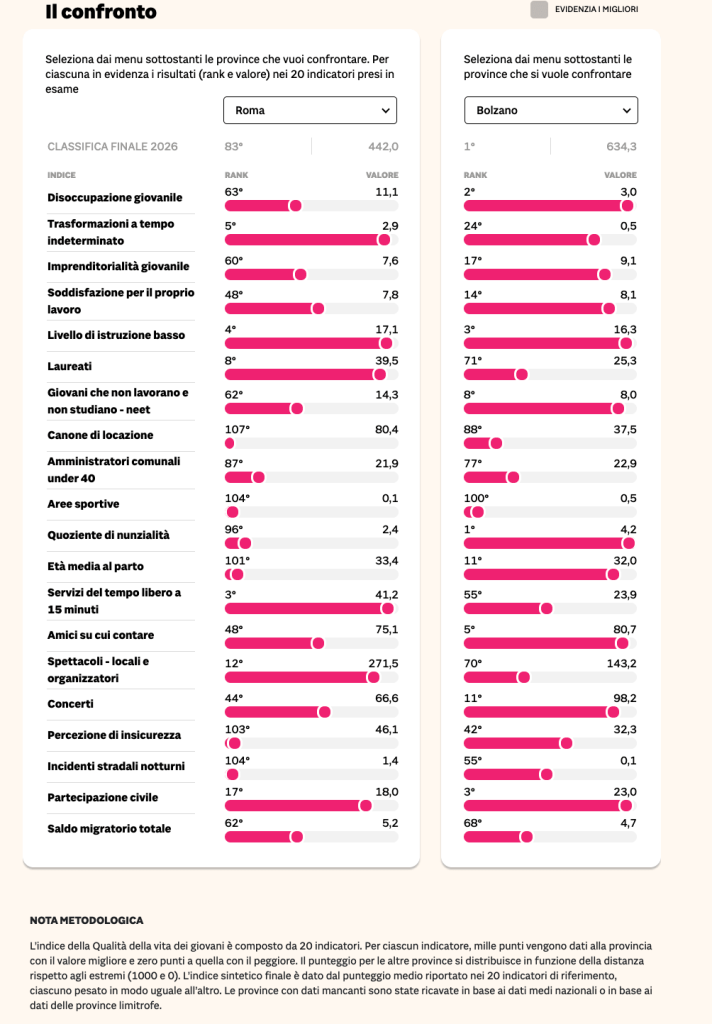
In the very recent study on the quality of life of young people in Italy (ages 15–35), presented at the Trento Economics Festival, Rome ranks 83rd out of 107 provinces, with 442 points.
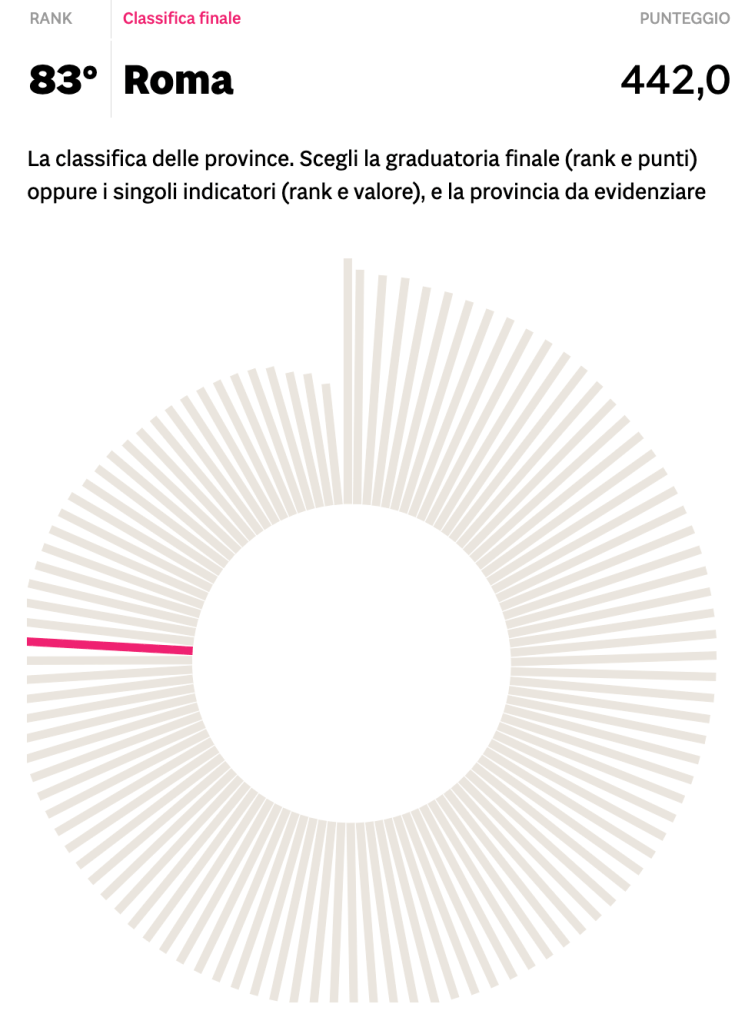
At the top are Bolzano, Trento, and Gorizia, and the top twenty spots are all in the North.
Yet, in the ranking for those over 65, Rome itself ranks third in Italy, behind only Trieste and Trento and ahead of Milan.
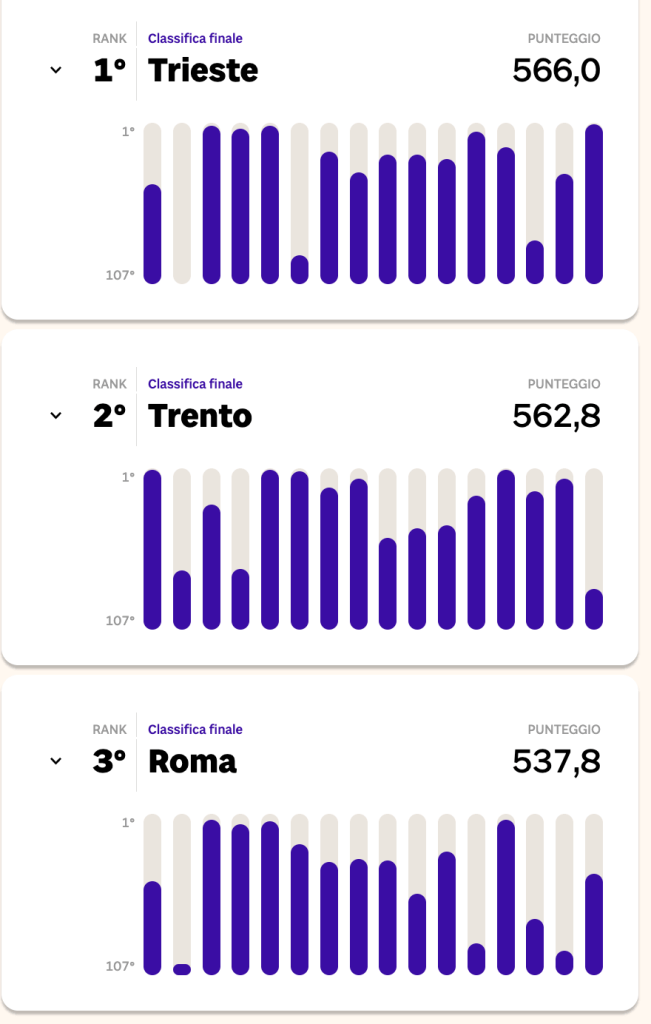
Two Italies coexisting in stark contrast.
Jobs, rent, and a general sense of insecurity: what’s weighing down (and what’s working) in Rome
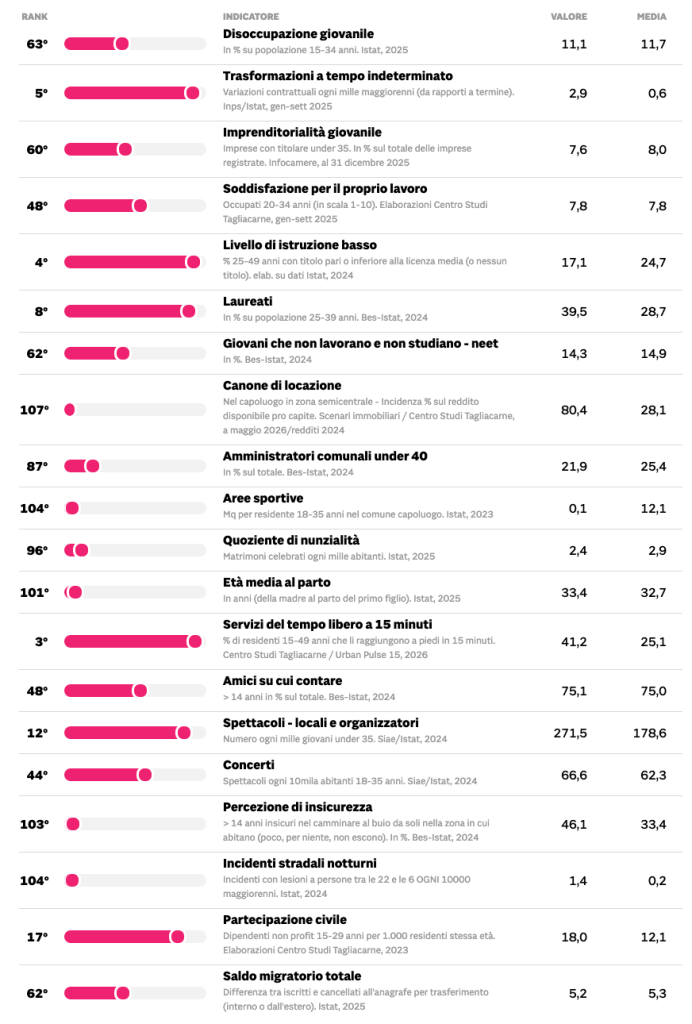
It is mainly the usual suspects that penalize young people. Rent, first and foremost: nationwide, rent accounts for an average of 28% of disposable income, and Rome is among the cities where this figure is highest.
Then there’s the lack of sports facilities,a high perception of insecurity, and the number of traffic accidents. In the background lies the greatest challenge of all: achieving financial independence.
However, it’s not all bad news
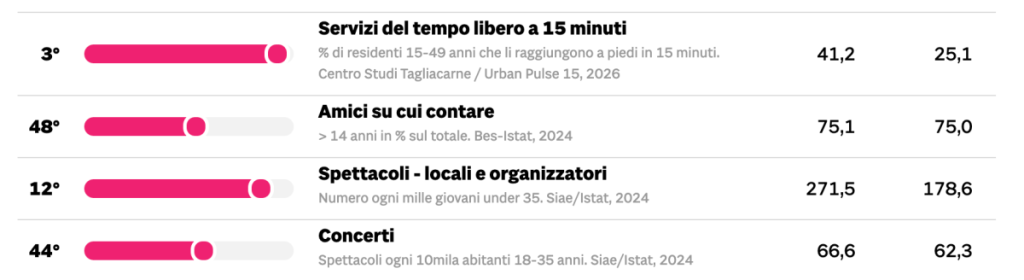
The capital scores well on walkable recreational facilities andcultural offerings —that part of the city “within the neighborhood’s reach” that young people actually experience.
There is, however, a small statistical consolation: this isn’t just a Roman problem. The rankings favor the small provinces of the North, while the major cities all lag behind to some extent: Milan is 50th, Turin 46th, Venice 63rd, and Naples a distant 104th.
For young people, employment, rent, and education are major concerns, and in these areas, major cities and the entire Central and Southern regions are at a disadvantage.
One final piece of data that shifts the perspective somewhat. Alongside the survey, a poll by Eumetra and the Fair Foundation reveals that four out of five young Italians say they are satisfied with their lives, and that their priorities are no longer money and work, but mental health, relationships, and free time.
The ranking measures a city’s structural conditions (rents, services, opportunities), not the happiness of its residents. And on that front, perhaps, Rome still has a few aces up its sleeve that no index can account for.