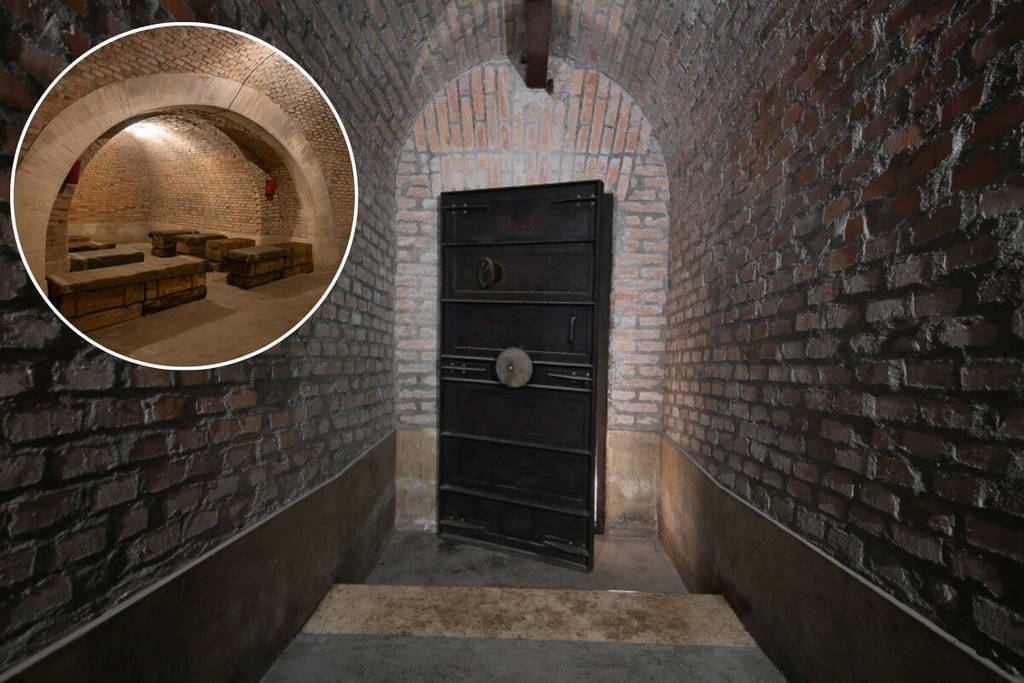

If, while strolling among the maritime pines of Villa Ada, you ever had the feeling that something extraordinary was hidden beneath the ground, you were right. After more than five years of silence and a meticulous €2.4 million restoration, the heavy armored doors of the Savoy family’s air-raid bunker are finally opening again.
This is not just a historic reopening: it is the return to light of a place where military engineering meets an aesthetic so symmetrical and refined that it seems to have come from the mind of a visionary director.
A circular labyrinth in the underground heart of Rome
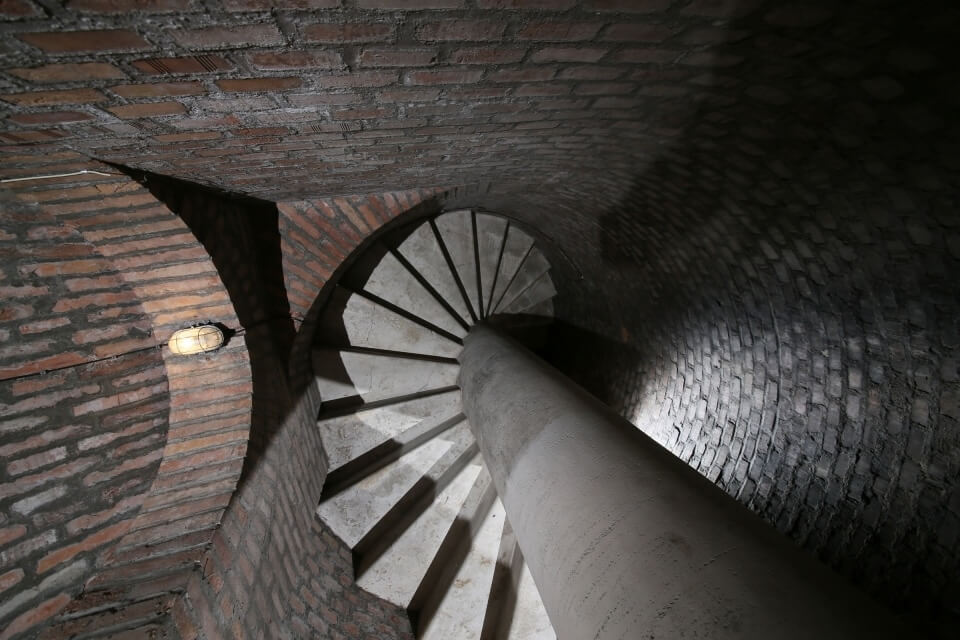
Forget the cramped and dusty bunkers you’ve seen in documentaries about World War II. The one commissioned by Vittorio Emanuele III between 1942 and 1943 is a structure that amazes with its doughnut-shaped layout, a sophisticated technical choice designed to neutralize the shock waves of bombs.
With its 200 square meters divided into seven rooms, the shelter is a triumph of rationalist architecture: clean lines, precise geometries, and a functionality that today we would almost call “design.”
As you cross the threshold, you will find yourself facing a colossal detail: two iron and concrete doors weighing 1,800 kg each. The King did not run through the trees to safety; he arrived here comfortably seated in his Fiat Torpedo, entering directly into the heart of the hill. A bomb-proof garage that still exudes the suspended atmosphere of those frenetic days leading up to September 8, 1943.
Pedaling to breathe: the analog charm of bunker fans
The real highlight, the thing that makes the comparison with Wes Anderson irresistible, is the ventilation system. In one of the rooms, you will find ‘pedal-operated electric fans’: actual stationary bicycles connected to gas filters. In the event of a power failure, soldiers had to pedal to provide oxygen to the royal family.
Seeing these analog machines, with their exposed gears and leather saddles, is a visual journey into an era when technology had a physical, tangible, and incredibly photogenic form.
The restoration, financed by PNRR funds, did not only save the concrete. Naturalistic engineering interventions stabilized the Colle delle Cavalle Madri, planting 900 new shrubs that now embrace the entrance to the bunker, creating a wonderful contrast between the rigidity of iron and the rebirth of nature.
How to visit the Villa Ada bunker: opening hours and costs
The site is managed by the Roma Sotterranea association, which transforms the visit into an immersive experience. As the site is delicate, access is not free but takes place through scheduled guided tours. You can choose between two routes to discover ‘invisible’ Rome:
- The Savoy Refuge (75 minutes): a tour focusing on the bunker, its original furnishings, and an evocative video documentary curated by Fabio Toncelli. Cost: €13.
- Bunker + La Villa (2 hours): an urban trek that starts from Via Salaria, passes through the Temple of Flora and the Palazzina Reale (now the Egyptian Embassy), and then descends into the underground. Cost: €19.