
In 1977, NASA launched the Voyager Golden Record toward the outer reaches of the Solar System—a golden record designed to tell the story of humanity to any potential extraterrestrial civilizations: among the sounds of Earth, three tracks bore the signature of Johann Sebastian Bach—more than any other composer.
Fifty years later, that dialogue between the Baroque genius and the cosmos takes the reverse path and arrives in Rome: on Friday, January 29, 2027, the Teatro Ghione will host “Bach in Space,” a live piano concert in which the German composer’s music meets real images of space.
29 January 2027 18:30
Teatro Ghione
What is Bach in Space?
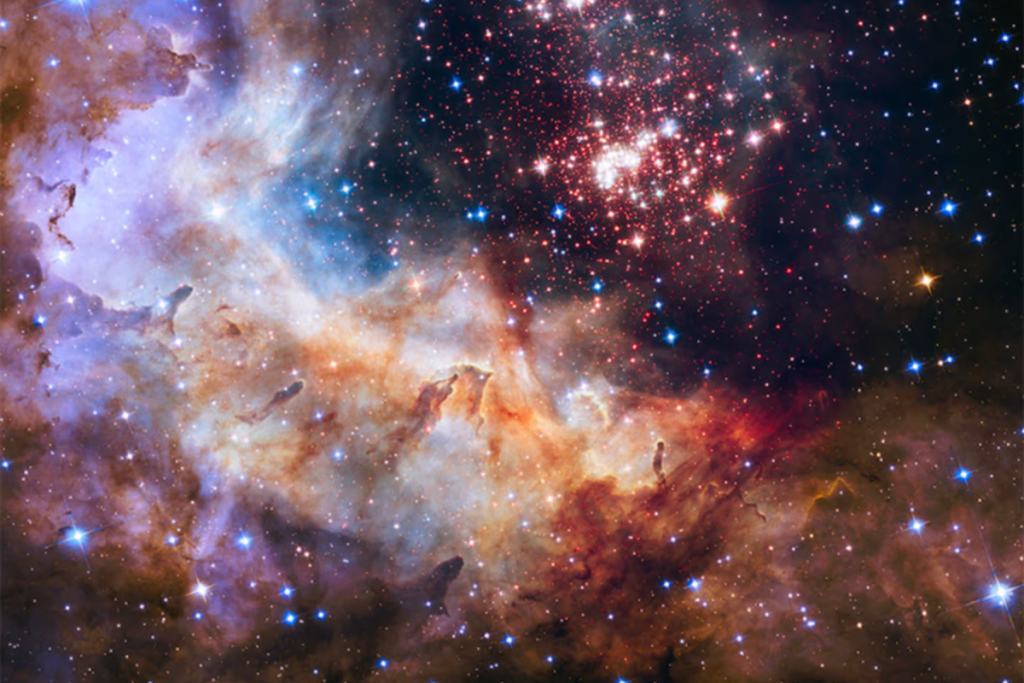
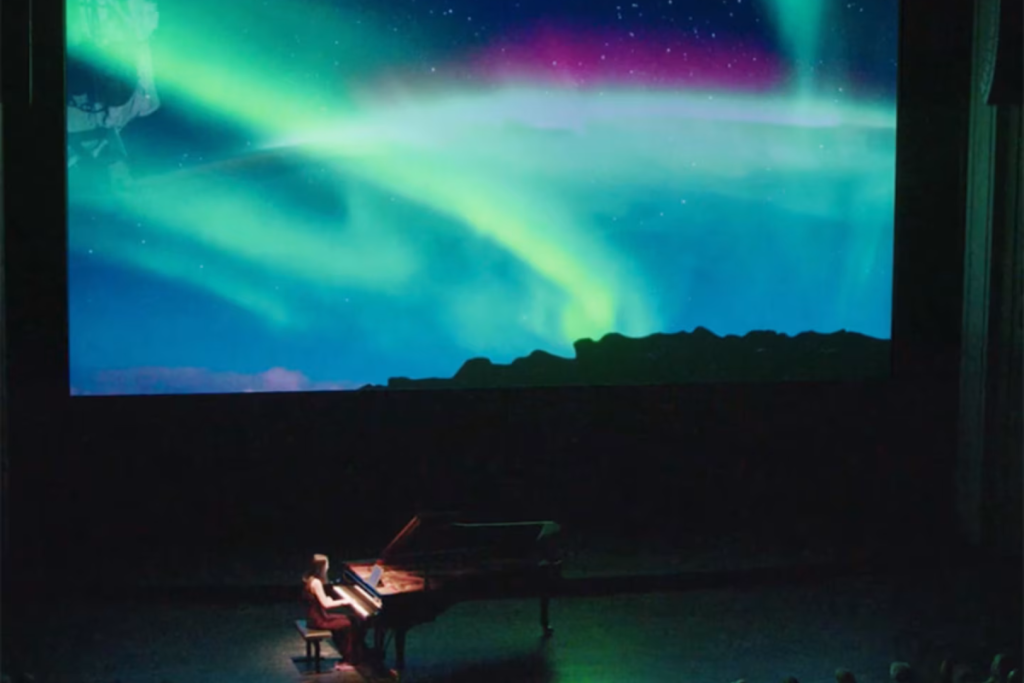
More than just a recital, Bach in Space is an immersive audiovisual experience built on the balance between acoustic sound and astronomical observation. There are no prerecorded tracks on stage: Bach’s compositions are performed entirely live on the piano, while behind the musician, high-resolution real cosmic images provided directly by NASA and the ESA (the European Space Agency) are projected.
What makes the performance unique is the synchrony between musical gesture and image: the rhythm of the projections follows the phrasing, pauses, and dynamics of the keys in real time. The pianist’s silhouette remains visible as an integral part of the scene, creating a minimalist image in which the geometric rigor of Bach’s composition engages directly with the silent vastness of nebulae, planets, and galaxies.
From his connection to Italy to the Goldberg Variations: the evening’s program
The concert in Rome will open with a direct tribute to the relationship between Bach and the musical tradition of the Italian peninsula. In the 18th century, the composer looked upon Italy with great admiration, transcribing several Italian concertos for the keyboard—including Alessandro Marcello’s famous oboe concerto—and eventually publishing his *Concerto italiano* in 1735. The Adagio from Marcello’s concerto will open the evening, accompanied by the first images of the universe in the background.
From there, the program will explore some of the most celebrated masterpieces of Bach’s repertoire—from the Goldberg Variations to The Well-Tempered Clavier, including chorales and excerpts from cantatas. Most of these works were not originally conceived for the modern piano, an instrument still in its infancy during Bach’s time: hearing them in this new context offers a fresh way to rediscover them.
Why Bach and space seem made for each other
The idea that the movement of the stars obeys musical laws spans centuries of intellectual history. As early as antiquity, the Pythagorean theory of the “music of the spheres” envisioned celestial bodies moving according to harmonious mathematical ratios—an architecture of numbers even before that of sounds. In 1619, the astronomer Johannes Kepler sought out precisely those proportions in planetary orbits in his treatise *Harmonices Mundi*.
More than a century later, in 1747, Bach himself joined the Society for Musical Sciences in Leipzig, founded by Lorenz Christoph Mizler—a circle dedicated to the scientific and mathematical study of music. The entire concert lasts about 75 minutes, with a fixed set list and theater-style seating: the atmosphere remains contemplative and elegant, free from intrusive special effects or frenetic editing, leaving only the piano, the music, and the sky on stage.
29 January 2027 18:30
Teatro Ghione
How to attend Bach in Space in Rome
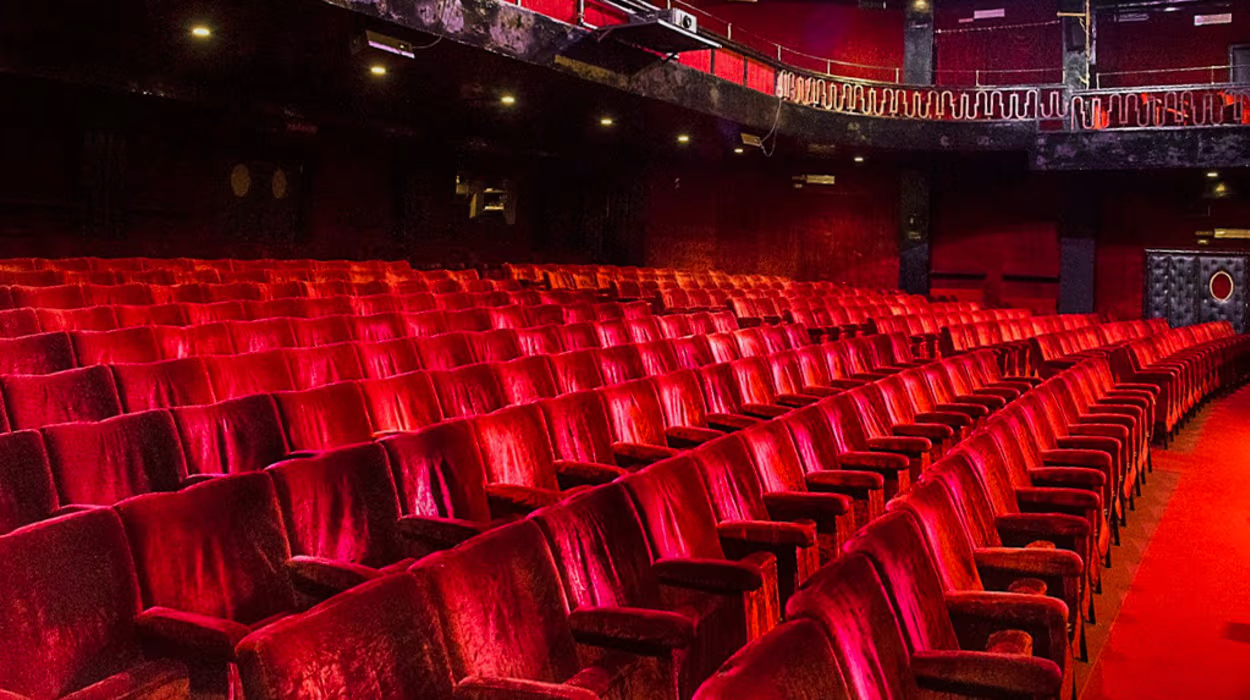
The event at the Teatro Ghione (in the heart of the Borgo neighborhood, just a short walk from St. Peter’s) is scheduled for Friday, January 29, 2027, with two performances designed to fit the rhythm of a Roman evening: the first at 6:30 p.m. and the second at 9:00 p.m. A rare opportunity to hear live the music that humanity has chosen as its calling card to the stars, while this time it is the universe that enters the theater.
29 January 2027 18:30
Teatro Ghione